

Dilbert readers – Please visit Dilbert.com to read this feature. Due to changes with our feeds, we are now making this RSS feed a link to Dilbert.com.
 Laughzilla the Third (2012)
The Third Volume in the Funny Stuff Cartoon Book Collection Available Now.
Laughzilla the Third (2012)
The Third Volume in the Funny Stuff Cartoon Book Collection Available Now. |
 Themes Memes and Laser Beams - The Second Volume in the Funny Stuff Cartoon Book Collection.
 Click Here to get the book in Paperback While Available on Amazon |

Funny Stuff : The First Cartoon Book from The Daily Dose. Available on Lulu. |
Dilbert readers – Please visit Dilbert.com to read this feature. Due to changes with our feeds, we are now making this RSS feed a link to Dilbert.com.

Messaging apps are all the rage right now, and many of them are incorporating other services such as games and commerce as they inch closer toward becoming platforms. It’s getting more difficult to stand out among the competition, but yet another messaging app has just joined the party.
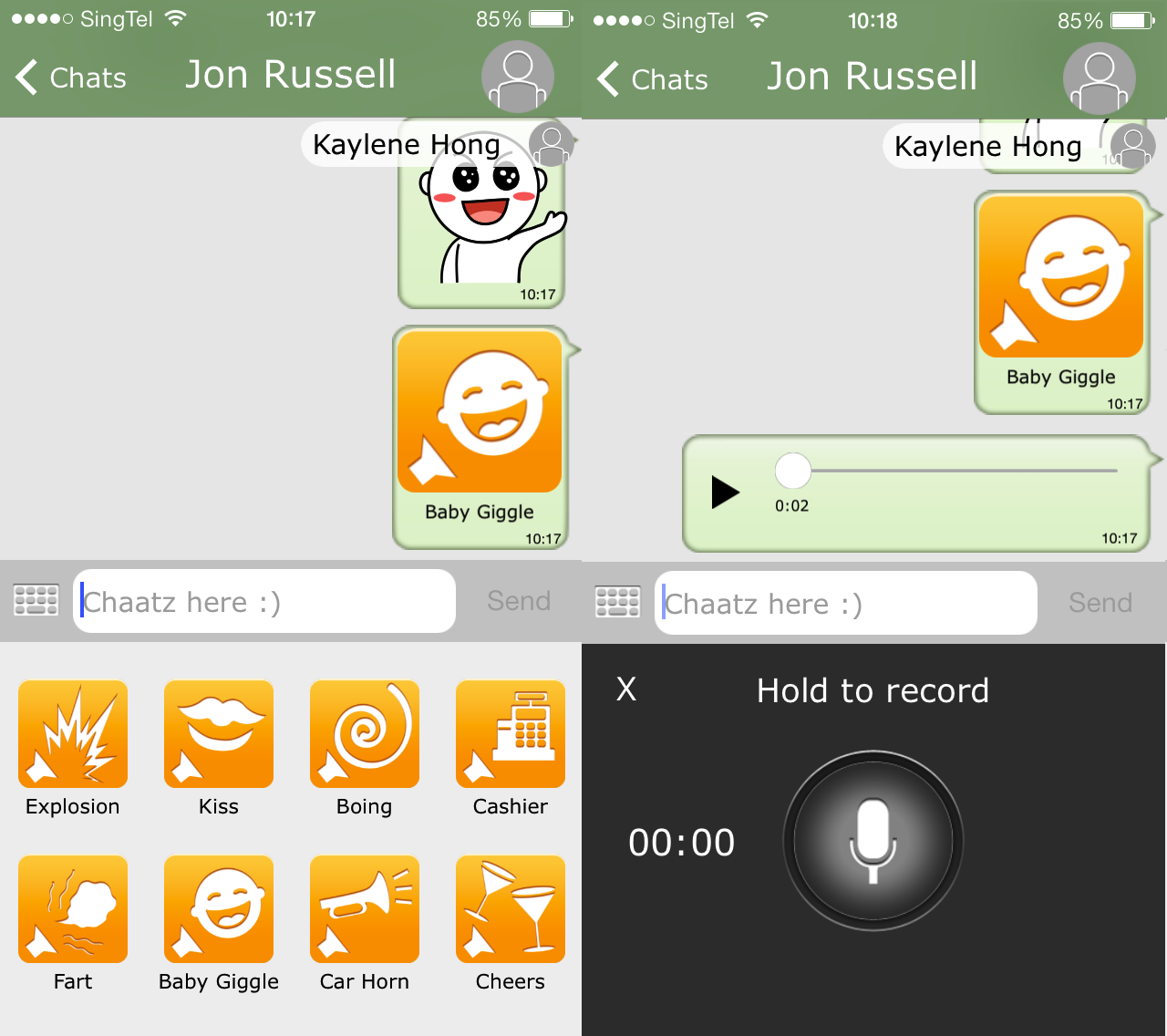
What’s interesting though is that this new messaging app, Chaatz, is a refreshing antithesis of the feature-packed platforms that are trending on the market currently. Chaatz does not look impressive at first glance — its interface is simplistic and unattractive looks-wise — and it only has the basic features that form the backbone of chat apps: text messages, voice recordings, only 10 stickers and a handful of voice effects.
However, what is unique about Chaatz is the ability to separate your online chat profile into different roles — basically you get what is known as a ‘Chaatz Number’ so you can keep your real phone number entirely anonymous. This means you don’t have to reveal your real number to people including marketing and sales personnel, work acquaintances or those whom you meet on your travels.
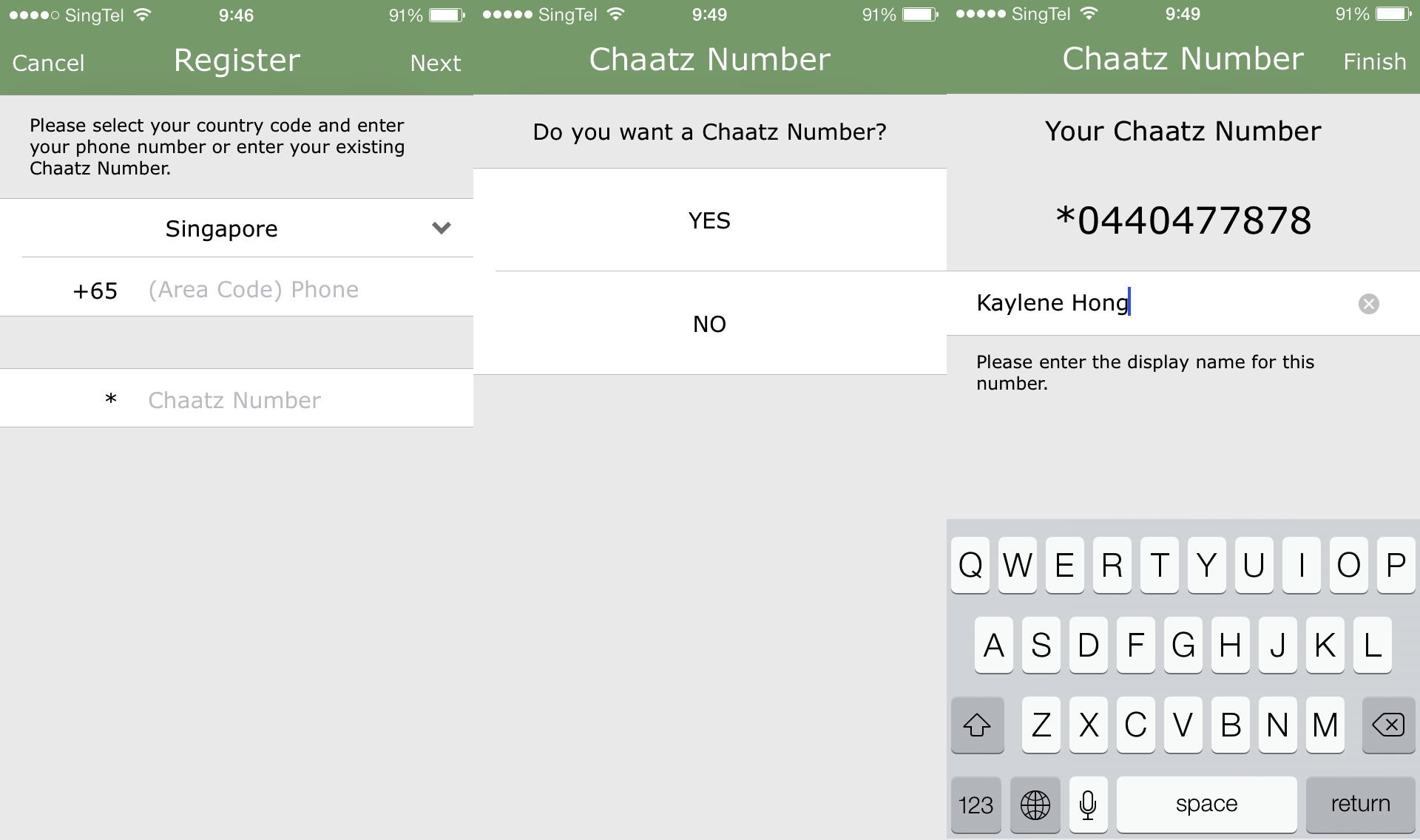
The initial goal of Chaatz is to “help people organize and control their conversations, in a private manner” — which means you get to avoid accidentally messaging a co-worker with something personal meant for a friend. You can manage your conversations based on your different profiles, and the name of the profile you’ve chosen to use will appear on the top right corner within every chat window so you can ensure you’re messaging someone using the correct profile.

You can even choose to connect another phone number on the same app, an extremely useful feature for those who shuttle between places around the world and change their SIM cards and in turn, mobile numbers, frequently.
Behind Chaatz is the team that built Facebook’s feature phone app, and those with feature phones are their ultimate target audience — which probably explains why Chaatz looks so simplistic. Due to its lightweight nature, messages sent through Chaatz are extremely fast, as witnessed in our testing — which means it probably doesn’t use much data, a positive proposition for those with feature phones in countries where data is still expensive or slow.
The long-term goal of Chaatz’s founders is to connect the remaining population of five billion feature phone users around the world to a mobile social network. In the third quarter of this year, the team will launch an app solely for feature phones to allow users to communicate on the same platform as those with smartphones — “allowing more powerful mobile communications and social networking to be introduced to emerging markets where it doesn’t exist today due to the high cost of smartphones and messaging services.”
In essence, the appeal of Chaatz lies in its simplicity, which is a boon for those who need to contact people in emerging markets who still have feature phones. For example, in the Philippines, feature phones still comprise 89 percent of all phones in the country, which means it’s more difficult to connect with those in the US using a messaging network. This explains why Facebook is so popular among many in the emerging world.
A recent report from IDC showed that feature phones still make up a large part of the world. Even after smartphones overtook feature phones for the first time — accounting for 55.1 percent of the 1 billion devices shipped in 2013 – feature phones still accounted for nearly half of all phone shipments last year.
Chaatz’s ultimate aim is to connect the 55.1 percent of smartphone owners in the world with the other 44.9 percent who own feature phones — but it faces a seriously huge challenge as it seeks to come up against established apps including Facebook, and we can’t help but be a tad skeptical.
First of all, it isn’t a given that there is a huge market of people wanting to connect between the developing and developed world. What’s more, the simplicity of the messaging app is a double-edged sword. After all, Chaatz has to appeal to smartphone users before it launches the feature phone app later this year, and we have all seen how users are being wooed by chat apps packed with tons of cutesy stickers and a whole load of other features now.
Perhaps the only advantage of Chaatz is that it probably uses so little data that feature phone users would prefer it for chatting, over other content-filled apps such as Facebook.
Chaatz is now available for iPhone users, while the Android app will land some time later.
➤ Chaatz | iOS
Headline image via Shutterstock
 Samsung has reportedly developed a service that lets developers and apps understand more about what users do with their phones, as part of its ongoing efforts to increase its software footprint on mobile.
According to a report from The Information — via The Verge — the world’s largest smartphone maker has developed Context, a service that collects information about the behavior of phone owners — the words they type, apps they open and other data they use. This information would then be provided to apps to help provide tailored content or ads: for example, serving a sports video to a user that uses sports apps and regularly types words related to sports.
While details of the service have emerged, it remains unclear whether Context will launch with future Samsung devices. The Information reports that there has been internal debate at Samsung over whether the service will be beneficial to sales. It remains to be seen how users would feel about having their every action tracked, despite the potential benefits.
We’ve reached out to Samsung for comment.
Image via JUNG YEON-JE/AFP/Getty Images

The Currency Cloud‘s payments service is set to undergo a significant revamp from today, with a new look and feel being outed alongside new streamlined payment integration and other features.
The platform is showing off its new UI – which also now includes a customizable dashboard – and Cash manager and TCC Direct features (both of which have been in beta before now) at Finovate Europe in London.
Where The Currency Cloud differs from other payment services is that it provides the infrastructure to facility other businesses’ online payments. So its customers are companies like other payments firms, banks or e-commerce providers.

With the new features, the company says that its customers can now maintain and manage balances in multiple currencies, ultimately reducing the time their own customers have to wait for cash to be processed.
In addition to making its UI, branding and website a bit prettier and bolstering the feature set, the company also announced that it’s opening up its API in a bid to get new integrations up and running in less than a month. The Currency Cloud will be opening a developer center in March to ensure that customers have the tools and support required for making best use of that fresh new API.
Featured Image Credit – Shutterstock