

Dilbert readers – Please visit Dilbert.com to read this feature. Due to changes with our feeds, we are now making this RSS feed a link to Dilbert.com.
 Laughzilla the Third (2012)
The Third Volume in the Funny Stuff Cartoon Book Collection Available Now.
Laughzilla the Third (2012)
The Third Volume in the Funny Stuff Cartoon Book Collection Available Now. |
 Themes Memes and Laser Beams - The Second Volume in the Funny Stuff Cartoon Book Collection.
 Click Here to get the book in Paperback While Available on Amazon |

Funny Stuff : The First Cartoon Book from The Daily Dose. Available on Lulu. |
Dilbert readers – Please visit Dilbert.com to read this feature. Due to changes with our feeds, we are now making this RSS feed a link to Dilbert.com.

We’ve talked about Dogecoin — a Bitcoin-like virtual currency that started as a bit of fun — having potential as a micro-currency for transactions and ‘tipping’ on the Internet (more on that below), and it seems like it is gaining credibility among investors. Dogecoin founder Jackson Palmer says he has rejected $500,000 investment proposals following early discussions with at least two VC firms.
Speaking to Techly at a meet-up in his native Australia, Palmer said he has no interest in taking on funding, but did have preliminaries talks with a VC firm in the US and another in Australia.
We checked in with Palmer to validate the claim — because you can never be too careful — and he confirmed the funding offers, explaining to us his belief that Dogecoin is best left as a community-driven entity:
I really think Dogecoin’s strength is that it belongs to the community that has brought it this far. It’s the internet’s currency, and doesn’t rest in the hands of any one person or entity.
I guess the argument of VCs is that taking investment could assist in the growth of the currency – but the fact is that the bulk of it’s growth comes from the community and not the small core team we maintain for official projects like charity sponsorship. I’m fairly confident in the moon trajectory the community has set, and I believe in them.
Whether that interest comes in response to Dogecoin’s potential or is a side affect of the ‘Bitcoin boom,’ Palmer is staying focused on making Dogecoin a currency that fosters social good as a “grassroots community” project.
Reflecting on a recent initiative that raised $30,000 to bring service dogs to children in need, and a second project that raised a $30,000 donation to enable the Jamaica bobsled team to compete at the Sochi Winter Olympics, Palmer told Techly:
That’s why I turned those guys down. A lot of investors come to me and they say ‘you know you could get rich off this, you can make millions. What are you going to tell your grandchildren in the future?’
And I reply, ‘you know what I’m going to tell my grandkids? I’m going to tell them that we paired service dogs with children in need, off the back of a f***ing joke.’
The fact is that out of nothing I can contribute $30,000 to a children’s charity that I believe in, that is payment enough. I don’t want anything more. I could leave tomorrow but the fact is I’ll be happy for the rest of my life. It’s all I want.
The Dogecoin founder says people won’t get rich of the currency, as many long-term investors have done with Bitcoin. That was reinforced by a decision earlier this month to allow annual inflation of the currency once the hard cap on coins mined by computers is reached.
So what else is Dogecoin good for?
In addition to enabling social good and charitable causes, Jackson sees Dogecoin’s sweetspot as a way to show appreciation for others on the Internet. Beyond just liking or retweeting content, you could ‘tip’ them 50 Dogecoins, which is around $0.07, for example.
He explains more:
The internet is asking for a currency akin to the US or Australian dollar that you can send to somebody else without having to worry about it and it’s more tangible than clicking a button and that person getting a notification that said I liked it.
When somebody likes something that I post it’s more tangible than a little bit of reputation. It’s not something that can be manufactured. It also costs the end user. That’s how a currency works. Or it should.
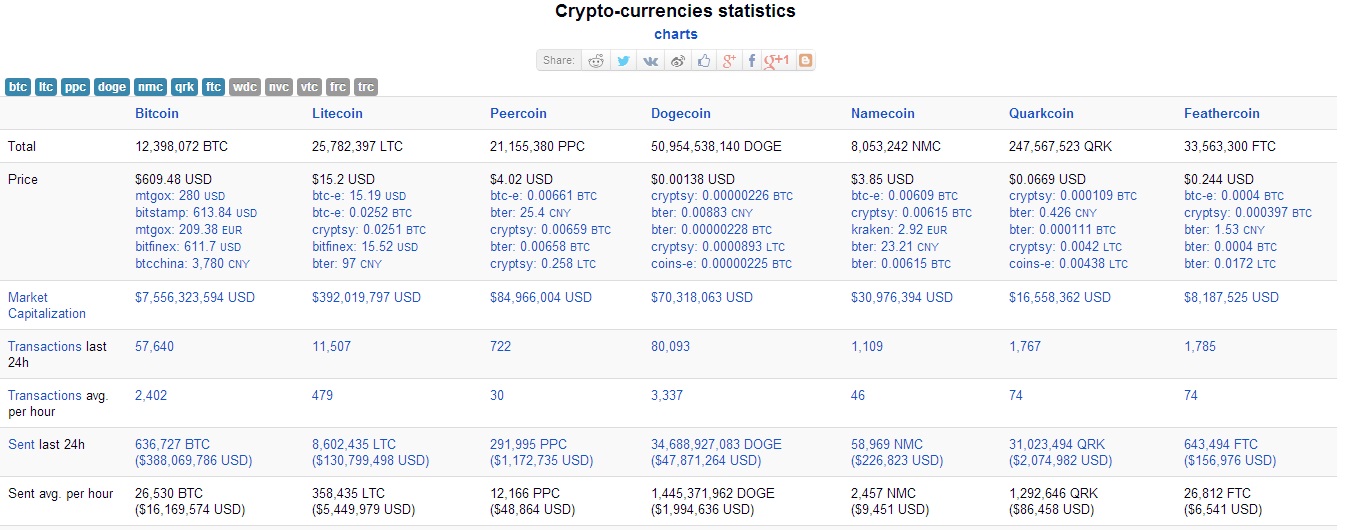
Dogecoin was written off by many as a joke — which it no doubt was at first — but it is appears to be settling into a niche. Data from Bitinfocharts.com shows that its market cap is the third largest among virtual currencies, despite having a meager valuation of $0.00138 per coin. (Bitcoin is currently around the $600 mark, but has been as high as $1,000.)
Related: Virtual currency Dogecoin suffers first hack as $13,000 is stolen from an online wallet service
Image via Oleg Znamenskiy / Shutterstock

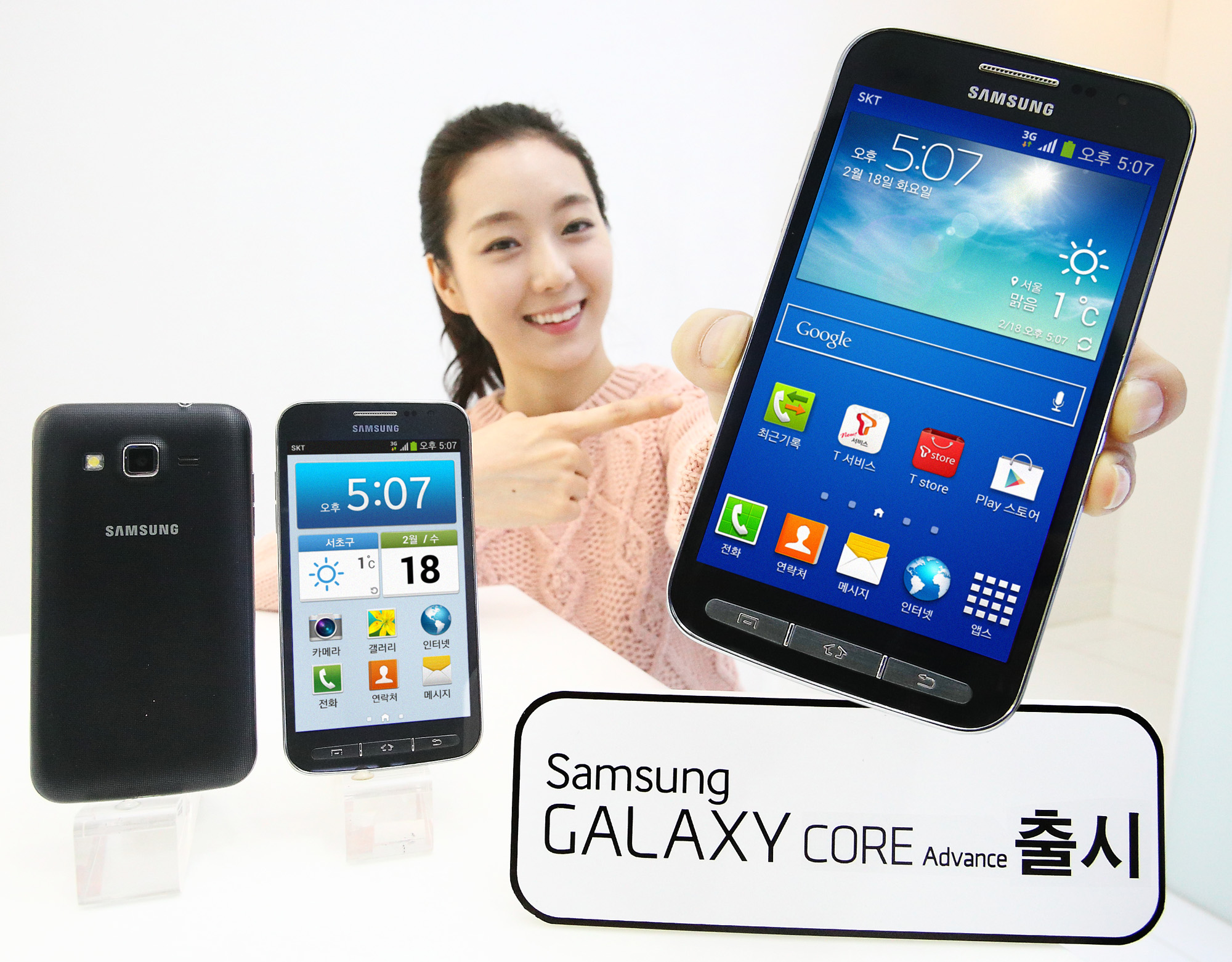
Samsung unveiled the Galaxy Core Advance in December of last year and, true to its word, the company is launching the budget 3G device this week. The phone goes on sale in Korea tomorrow (February 18) priced at 410,300 won, which is just under $390 — there’s no word on when it will make it overseas.
Update: Samsung tells us that the device “will be released in Europe and the U.S. in the coming months,” but the company hasn’t provided more specific details.
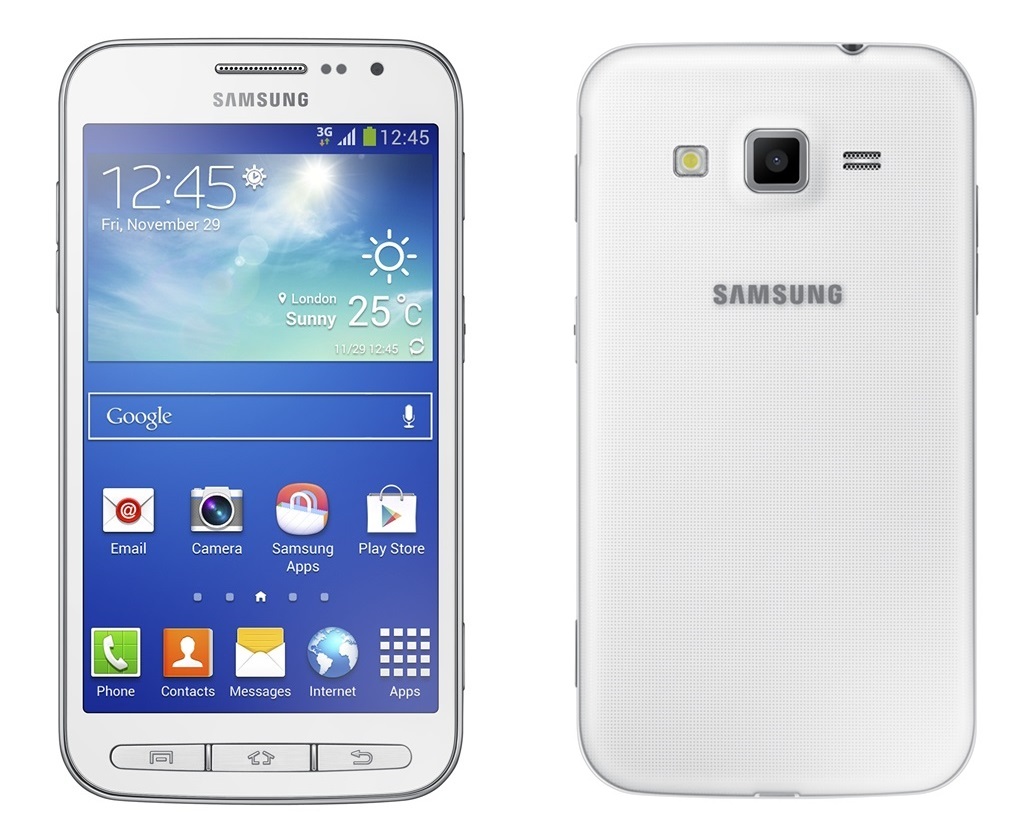
To recap the high-end points, the Galaxy Core sports a 4.7-inch screen and comes with Android 4.2 Jelly Bean and physical keys. As we wrote when it was first announced, there’s not an awful lot to get excited about here — it is very much a lower-end version of the Galaxy S3, complete with a cheaper price tag.
Given that there is no support for LTE networks — an absolute must in Korea, let alone the West — we expect it to be focused very much on emerging market consumers; we’ve reached out to Samsung for details of when it will go on sale outside of Korea, and at what price. Either way, with Mobile World Congress next week, you’d do better to wait on new devices being announced and discounts for older models than buy this phone.
To recap, the Galaxy Core advance is powered by a dual-core 1.2 GHz processor and comes with 1GB RAM, 8GB of internal memory, and a microSD card slot that can accommodate up to 64GB more storage.
The rear-facing camera clocks in at five megapixels, with a 2,000 mAh battery keeping things going. The usual Samsung services are on tap, including S Voice, S Translator, Sound & Shot, Group Play and Easy Mode — while there’s support for NFC (S Beam), Bluetooth 4.0, GPS with GLONASS, and three physical keys.
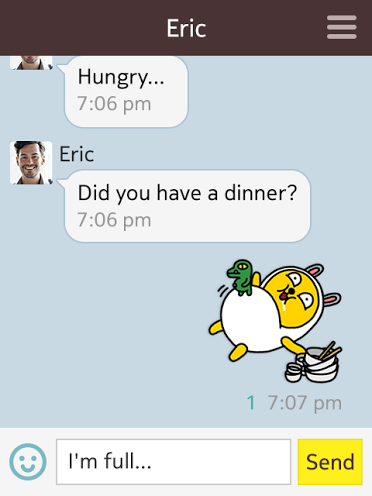 Kakao Talk, the voice and text chat app from Korea with over 100 million registered users, has increased its focus on emerging markets with the launch of an app for Nokia Asha range of phones.
Asha isn’t a big deal in Korea or Western markets, but the smartphone-cum-feature-phones are designed for ‘the next billion’ smartphone owners and is said to have traction in markets like India, Latin America and Africa. Emerging markets are increasingly becoming a focus for chat apps, Line launched an app for the ‘affordable’ Firefox OS in Latin America and Europe earlier this month, for example.
Initially available for Nokia’s 500, 501, 502 and 503 devices, Kakao says the service will launch for other devices in the Asha range soon. Rival services WhatsApp, Line and WeChat are already available for the Nokia platform, giving users plenty of choice when it comes to chat apps.