

The Daily Dose

laugh every day with cartoons jokes and humor
  • Home
  • About
    • Press
      • Press Release – Announcing Laughzilla the Third ebook
      • Press Release – The Daily Dose Kicks Off Its 16th Year with New Books and More Irreverent Laughter
      • Press Release – Themes Memes and Laser Beams Now Available in Paperback
      • Press Release – Announcing Themes Memes and Laser Beams
      • In The News
    • Privacy
  • Archive
  • Books
  • Shop
  • Collections
    • Galleries
      • Gallery
      • Captions
      • Flash Cartoons & Greeting Cards
        • Laughzilla’s Oska Flash Animation Cartoon Greeting Cards
        • Oska Cupid Love Humor
    • #OccupyWallStreet
    • cats
    • China
    • Food
      • Hors d’oeuvres
        • Ball of Cream Cheese
      • Entrees / Main Courses
        • Meatballs with Baked Beans and Celery
    • Gadaffy
    • Google
  • Links
  • Video
  • Submit a joke
DeviantART Facebook Twitter Flickr pinterest YouTube RSS

Subscribe for Free Laughs!


Latest Comics

  • This Memorial Day, Trump Meme Coin Congratulates Profit Takers
  • 25 Years of The Daily Dose
  • The Best Cartoons
  • Bitcoin sings “Fly Me To The Moon”
  • 22 years of The Daily Dose

Comic Archive

Happy New Year Cinema

Daily Dose News Roundup

  • A manual pentest costs 50,000 dollars. Intruder built an AI that does it in minutes.
  • NHTSA says the Tesla Model Y is the first car to pass its new safety tests. The agency is simultaneously investigating 3.2 million Teslas for crashing.
  • Jeff Bezos’s representative just left the board of a startup that raised $1.4 billion on his name. The first truck has not been built.
  • Snap lost a 400 million dollar AI deal, 20 million dollars a month to the Iran war, and 24 per cent of its stock price. The AR glasses had better work.
  • Volkswagen just became Rivian’s biggest investor. It is not buying trucks. It is buying the software its own engineers could not build.

Quotable

"It's the nature of a male Tiger to play with as many females he can, especially when he's the champion of the Woods." ~ Laughzilla

Fresh Baked Goods

Get The Daily Dose's ebook: Laughzilla the Third - A Funny Stuff Collection of 101 Cartoons from TheDailyDose. Click here to get the e-book on Amazon kdp. Laughzilla the Third (2012) The Third Volume in the Funny Stuff Cartoon Book Collection Available Now.

Click here for the Paperback edition


Support independent publishing: Buy The Daily Dose's book: Themes Memes and Laser Beams - A Funny Stuff Collection of 101 Cartoons by Laughzilla from TheDailyDose. Click here to get the book on Amazon. Themes Memes and Laser Beams - The Second Volume in the Funny Stuff Cartoon Book Collection.

Click Here to get the book in Paperback While Available on Amazon

Themes Memes and Laser Beams - 101 Cartoons by Laughzilla. Get the e-book on Lulu.

Click Here to get The Daily Dose Cartoon ebook on amazon kindle

Funny Stuff :
The First Cartoon Book
from The Daily Dose.
Available on Lulu.

a couple of laughzillas on a blue diamond background

An online Magna Carta is needed to protect the World Wide Web’s independence, its inventor says

Mar12
by Sindy Cator on March 12, 2014 at 4:11 am
Posted In: Around the Web, Insider, World Wide Web

180520863 An online Magna Carta is needed to protect the World Wide Webs independence, its inventor saysThe inventor of the World Wide Web, Sir Tim Berners-Lee, believes an online ‘Magna Carta’ is needed to protect the independence of the Web and the rights of its users, The Guardian reports.

On the 25th anniversary of his first draft of the first proposal for what would become the World Wide Web, Berners-Lee warns that the neutrality of the medium is under threat from governments and corporations. He tells The Guardian:  ”Unless we have an open, neutral Internet we can rely on without worrying about what’s happening at the back door, we can’t have open government, good democracy, good healthcare, connected communities and diversity of culture. It’s not naive to think we can have that, but it is naive to think we can just sit back and get it.”

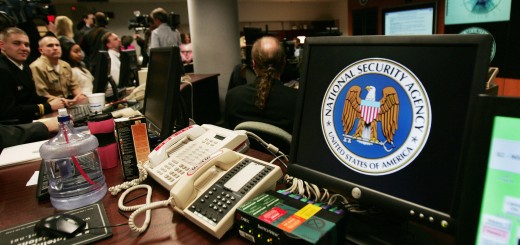
Berners-Lee has been a critic of the spying tactics that American and British governments have been accused of, in the wake of revelations by whistleblower Edward Snowden.

His plan for an online Magna Carta would cover principles of privacy, free speech and responsible anonymity, and is being taken up as part of a project called “The Web We Want”, which campaigns for digital rights.

➤ An online Magna Carta: Berners-Lee calls for bill of rights for web [The Guardian]

Image via Danny Lawson/AFP/Getty Images

└ Tags: news, syndicated
a couple of laughzillas on a blue diamond background

Alibaba goes all out to boost its entertainment offerings by taking a stake in ChinaVision Media

Mar12
by Sindy Cator on March 12, 2014 at 3:49 am
Posted In: Around the Web, Asia, Entertainment

146576764 520x245 Alibaba goes all out to boost its entertainment offerings by taking a stake in ChinaVision Media

It is clear that Chinese e-commerce giant Alibaba wants to branch out further into digital entertainment — last year it acquired social music-streaming service Xiami and developed a smart TV operating system, while this year it stepped into mobile games.

Now Alibaba has agreed to pay $804 million for a majority stake in ChinaVision Media Group, a Hong Kong firm specializing in TV and film production. This could very possibly mean that Alibaba may soon be taking steps to produce content in collaboration with ChinaVision. After all, throughout last year, Chinese tech firms were already taking steps to make their mark within the online video space, seeking to capitalize on the opportunities as Chinese consumers effectively started taking their TVs to the subway.

An Alibaba spokesperson tell us: We are pleased to collaborate with the ChinaVision Media Group to explore future business opportunities as part of Alibaba’s digital entertainment strategy.”

The company’s strategy has been pretty clear — by beefing up its services to include TVs, music and games, it is hoping to provide a diverse range of offerings to capture the attention of users and keep them within its ecosystem, which could ultimately lead to more e-commerce opportunities.

In April, Alibaba’s Taobao Marketplace rolled out functionality for Xiami, apparently to help transform the retail site from merely a shopping platform to a lifestyle and media platform. Subsequently, the company also rolled out smart TVs, which would incorporate e-commerce and support games and other forms of entertainment. Early this year, it launched mobile games on its Taobao shopping app and Laiwang chat app.

Headline image via Peter Parker/AFP/Getty Images

└ Tags: china, news, syndicated
a couple of laughzillas on a blue diamond background

In China, tech firms are issuing virtual credit cards to make online shopping easier

Mar12
by Sindy Cator on March 12, 2014 at 3:03 am
Posted In: Around the Web, Asia, e-commerce

shutterstock 148437164 520x245 In China, tech firms are issuing virtual credit cards to make online shopping easier

In China, tech firms are making it easier for consumers than ever before to shop and purchase goods online.

Rather than requiring you to have a traditional credit card applied via banks, Chinese e-commerce giant Alibaba announced that its payments arm Alipay will collaborate with China’s CITIC Bank to start issuing one million virtual credit cards next week, approving the creditworthiness of applicants based on their online shopping histories.

This means that CITIC Bank will impose credit limits based on information from Alipay on the applicant’s online shopping behavior. The minimum credit limit is CNY200 ($33).

Consumers can use the virtual credit card only on e-commerce platforms that accept CITIC credit cards, Alipay says. It can, however, also be used at offline retail outlets that accept Alipay’s Wallet app as a payment method.

In the meantime, Chinese Internet giant Tencent, which owns popular messaging service WeChat, is teaming up with CITIC Bank and Zhong An Online Property Insurance to issue one million virtual credit cards too.

In a statement sent to TNW, Tencent says that users of WeChat (known as Weixin in China) can apply for the card with a minimum credit limit of CNY50 ($8) and a maximum of CNY5,000 ($814). Consumers can use the card when paying via Weixin, or at designated offline retail outlets that support the scanning of Weixin QR codes.

Weixin Credit In China, tech firms are issuing virtual credit cards to make online shopping easier

A Tencent spokesperson says: “Introducing this virtual credit card is mainly to help users who have good credit records but are lacking short-term funds to quickly meet their consumption needs. For the businesses, this can maximize sales.”

Both Alibaba and Tencent say that the approval process for their virtual credit cards will take less time than conventional credit applications.

Last month, online retailer JD.com — which Tencent recently announced it was taking a 15 percent stake in — also launched a virtual credit card. However, that wasn’t in collaboration with any banks and was for use only on its e-commerce platform.

Alibaba and Tencent’s foray into providing credit for customers comes as both Internet firms have been selected to take part in the preparation work for setting up five new private banks in China. It seems like Alibaba and Tencent are well on their way to forming complete ecosystems in the Internet world which extend not only to purchasing products but to payment, credit and financial products as well.

Headline image via Shutterstock

└ Tags: news, syndicated
a couple of laughzillas on a blue diamond background

In China, tech firms are issuing virtual credit cards to make online shopping easier

Mar12
by Sindy Cator on March 12, 2014 at 3:03 am
Posted In: Around the Web, Asia, e-commerce

shutterstock 148437164 520x245 In China, tech firms are issuing virtual credit cards to make online shopping easier

In China, tech firms are making it easier for consumers than ever before to shop and purchase goods online.

Rather than requiring you to have a traditional credit card applied via banks, Chinese e-commerce giant Alibaba announced that its payments arm Alipay will collaborate with China’s CITIC Bank to start issuing one million virtual credit cards next week, approving the creditworthiness of applicants based on their online shopping histories.

This means that CITIC Bank will impose credit limits based on information from Alipay on the applicant’s online shopping behavior. The minimum credit limit is CNY200 ($33).

Consumers can use the virtual credit card only on e-commerce platforms that accept CITIC credit cards, Alipay says. It can, however, also be used at offline retail outlets that accept Alipay’s Wallet app as a payment method.

In the meantime, Chinese Internet giant Tencent, which owns popular messaging service WeChat, is teaming up with CITIC Bank and Zhong An Online Property Insurance to issue one million virtual credit cards too.

In a statement sent to TNW, Tencent says that users of WeChat (known as Weixin in China) can apply for the card with a minimum credit limit of CNY50 ($8) and a maximum of CNY5,000 ($814). Consumers can use the card when paying via Weixin, or at designated offline retail outlets that support the scanning of Weixin QR codes.

Weixin Credit In China, tech firms are issuing virtual credit cards to make online shopping easier

A Tencent spokesperson says: “Introducing this virtual credit card is mainly to help users who have good credit records but are lacking short-term funds to quickly meet their consumption needs. For the businesses, this can maximize sales.”

Both Alibaba and Tencent say that the approval process for their virtual credit cards will take less time than conventional credit applications.

Last month, online retailer JD.com — which Tencent recently announced it was taking a 15 percent stake in — also launched a virtual credit card. However, that wasn’t in collaboration with any banks and was for use only on its e-commerce platform.

Alibaba and Tencent’s foray into providing credit for customers comes as both Internet firms have been selected to take part in the preparation work for setting up five new private banks in China. It seems like Alibaba and Tencent are well on their way to forming complete ecosystems in the Internet world which extend not only to purchasing products but to payment, credit and financial products as well.

Headline image via Shutterstock

└ Tags: news, syndicated
a couple of laughzillas on a blue diamond background

Smart kegerator can keep track of how much beer your friends drank

Mar11
by Sindy Cator on March 11, 2014 at 9:41 pm
Posted In: Around the Web, LifeHacks, Shareables

Phil Harlow got tired of owning a kegerator and not being able to keep track of who drank how much. So he built a smart kegerator, which lets you not only share beer with your family and friends, but can tell you how much they owe (even though there are no cans or bottles to count):

)

Version 1.0 of the smart kegerator is powered by a Raspberry Pi that keeps track of your tab based on the price of the keg and the volume of the beer. Facial detection is only shown in the video, but Harlow says the latest version uses facial recognition so you don’t have to interact with the device at all. He plans to eventually use weight sensors under each keg to get a better estimation of keg volume and a liquid probe thermometer to better estimate the temperature of the beer.

➤ Smart Kegerator

Image Credit: Phil Harlow

└ Tags: syndicated
  • Page 14,304 of 14,642
  • « First
  • «
  • 14,302
  • 14,303
  • 14,304
  • 14,305
  • 14,306
  • »
  • Last »
The Daily Dose, The Daily Dose © 1996 - Present. All Rights Reserved.
  • Home
  • About
  • Archive
  • Books
  • Collections
  • Links
  • Shop
  • Submit a joke
  • Video
  • Privacy Policy