

Title: Test-Taking Can Be Tough for Kids With Vision Problems
Category: Health News
Created: 6/14/2018 12:00:00 AM
Last Editorial Review: 6/15/2018 12:00:00 AM
 Laughzilla the Third (2012)
The Third Volume in the Funny Stuff Cartoon Book Collection Available Now.
Laughzilla the Third (2012)
The Third Volume in the Funny Stuff Cartoon Book Collection Available Now. |
 Themes Memes and Laser Beams - The Second Volume in the Funny Stuff Cartoon Book Collection.
 Click Here to get the book in Paperback While Available on Amazon |

Funny Stuff : The First Cartoon Book from The Daily Dose. Available on Lulu. |
Title: Test-Taking Can Be Tough for Kids With Vision Problems
Category: Health News
Created: 6/14/2018 12:00:00 AM
Last Editorial Review: 6/15/2018 12:00:00 AM

Proving you’re years late to the party, Hollywood is about to cash in on cryptocurrency. The project, called Crypto, focuses on a a federal agent (played by Beau Knapp) who returns to his home town in New York to investigate a case of corruption and fraud. Once there, the agent finds himself “enmeshed in a dangerous underworld populated by a mysterious art dealer, a crypto-currency enthusiast turned cyber-sleuth, and a corrupt accountant doing the bidding of ruthless clients,” according to The Hollywood Reporter. The project’s producers compared it to The Firm and The Girl with the Dragon Tattoo. Which sounds, if we’re being…
This story continues at The Next Web
Proving you’re years late to the party, Hollywood is about to cash in on cryptocurrency. The project, called Crypto, focuses on a a federal agent (played by Beau Knapp) who returns to his home town in New York to investigate a case of corruption and fraud. Once there, the agent finds himself “enmeshed in a dangerous underworld populated by a mysterious art dealer, a crypto-currency enthusiast turned cyber-sleuth, and a corrupt accountant doing the bidding of ruthless clients,” according to The Hollywood Reporter. The project’s producers compared it to The Firm and The Girl with the Dragon Tattoo. Which sounds, if we’re being…
This story continues at The Next Web
Dilbert readers – Please visit Dilbert.com to read this feature. Due to changes with our feeds, we are now making this RSS feed a link to Dilbert.com.
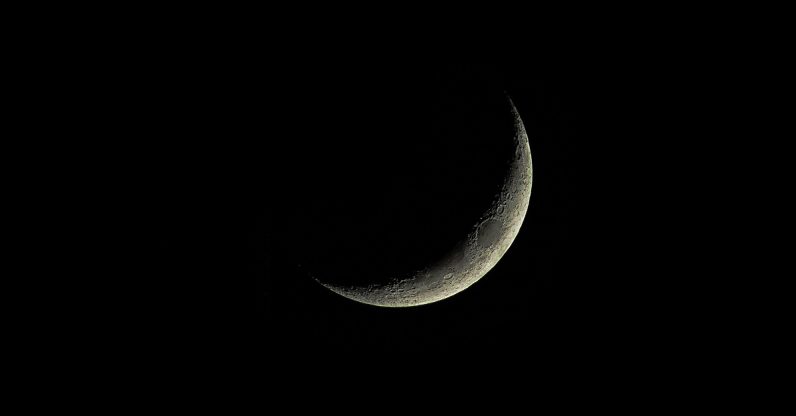
A new report from a team of researchers at Texas Tech suggests humans may have inadvertently given the moon a fever because we were a little too messy during our Apollo visits. NASA conducted a heat monitoring experiment on landing sites 15 and 17 between 1971 and 1972. During that time, it noted the temperature of the area increased by four degrees Fahrenheit. The mystery has bugged lunar observers for decades. In order to solve the puzzle, the researchers, led by Seiichi Nagihara, searched for several lost NASA tapes that recorded three years’ worth of temperature readings. After eight years, they…
This story continues at The Next Web