Title: High-Tech Pacemaker Reads Body Signals, Dissolves After Use
Category: Health News
Created: 5/27/2022 12:00:00 AM
Last Editorial Review: 5/31/2022 12:00:00 AM

A man wading in a pool of his own consciousness, surrealistically draped in the hallucinations of an artificial intelligence, shouts at me about poetry. He contorts himself with passion as his rhetoric reaches its fever pitch — you might say he ‘peaks’ — and suddenly bursts into self-awareness like a phoenix, renewed. Finally, he shakes an iPhone at me, declaring it a monument to human ambition and actuation. After watching, I feel like I’m both a tiny worm on a big hook and the master of my own universe. These are some wonderfully weird videos. Describing Jason Silva’s latest project,…
This story continues at The Next Web

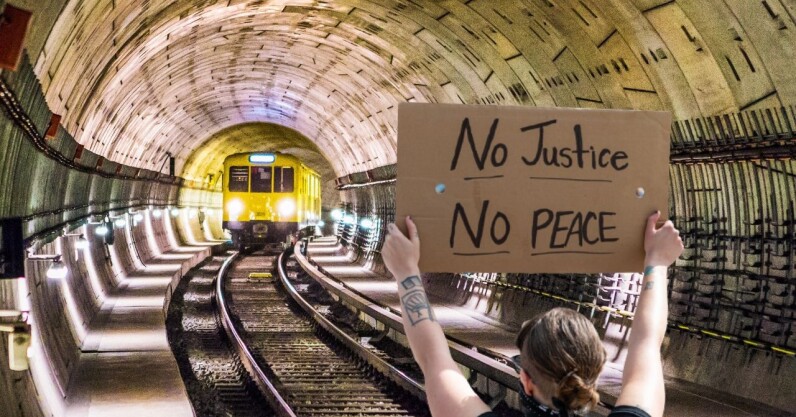
AI now guides numerous life-changing decisions, from assessing loan applications to determining prison sentences. Proponents of the approach argue that it can eliminate human prejudices, but critics warn that algorithms can amplify our biases — without even revealing how they reached the decision. This can result in AI systems leading to Black people being wrongfully arrested, or child services unfairly targeting poor families. The victims are frequently from groups that are already marginalized. Alejandro Saucedo, Chief Scientist at The Institute for Ethical AI and Engineering Director at ML startup Seldon, warns organizations to think carefully before deploying algorithms. He told…
This story continues at The Next Web
When self-driving cars crash, who’s responsible? Courts need to know what’s inside the ‘black box’

The first serious accident involving a self-driving car in Australia occurred in March this year. A pedestrian suffered life-threatening injuries when hit by a Tesla Model 3, which the driver claims was in “autopilot” mode. In the US, the highway safety regulator is investigating a series of accidents where Teslas on autopilot crashed into first-responder vehicles with flashing lights during traffic stops. A Tesla model 3 collides with a stationary emergency responder vehicle in the US. NBC / YouTube The decision-making processes of “self-driving” cars are often opaque and unpredictable (even to their manufacturers), so it can be hard to…
This story continues at The Next Web

Voyager 1 is the farthest human-made object from Earth. After sweeping by Jupiter, Saturn, Uranus, and Neptune, it is now almost 15 billion miles (24 billion kilometers) from Earth in interstellar space. Both Voyager 1 and its twin, Voyager 2, carry little pieces of humanity in the form of their Golden Records. These messages in a bottle include spoken greetings in 55 languages, sounds and images from nature, an album of recordings and images from numerous cultures, and a written message of welcome from Jimmy Carter, who was U.S. president when the spacecraft left Earth in 1977. The Golden Records were…
This story continues at The Next Web