



 Microsoft has started a project to map shanty towns in Brazil, known as favelas, as it seeks to “reduce the digital divide across the world.”
According to an announcement made on Microsoft’s Bing blog, bringing mapping infrastructure to these communities means that local economies can take advantage of localized information that is present online — which would help them to “fully participate in the digital town square in ways that many of us in the developed online world take for granted.”
Microsoft is optimistic that by putting Brazil’s favelas on the online map, it could even lead to building out something like Foursquare (which Microsoft just invested $15 million in) — an ambitious plan, but an optimistic glimpse at the future regardless, given that there has already been plenty of organic Internet activity in such shanty towns.
As part of its efforts to narrow the digital divide globally, Microsoft’s search engine Bing is also taking part in the Global Innovation Summit, which brings together stakeholders to explore the potential in these communities.
➤ Finding an Address for the Next Wave of Innovators [Bing blog]
Image via Lionel Bonaventure/AFP/Getty Images

UK styling brand VO5 has teamed up with The Brit Awards 2014 to become the first brands in the UK to use Twitter’s ‘Amplify’ program to spur fan engagement across the social network.
This year, the BRIT Awards is being broadcast live on ITV in the UK on February 19 and in a bid to increase awareness, sharing and general virality of the event, 60-90 second video clips from the live show will be posted via the Brit Awards 2014 official Twitter channel. Co-sponsoring the campaign is VO5, which has custom-branded pre- and post-roll clips for each video shared in this way.
As well as providing highlights from the night, the videos will also include highlights from before and after the ceremony and perfomances. Naturally, you can expect all manor of custom hashtags, in-video banners and promoted tweets to all play a part in the proceedings too. Something a little like below, but for music at the BRIT Awards.
Roy Hibbert's BIG block. One of the nicest you'll see #NBARapidReplay – http://t.co/aAJmjhQugM
— NBA (@NBA) May 19, 2013
In addition to the promoted Twitter activity, VO5 has also created an interactive hub and collaborative user-generated playlist on Spotify. Ads will also run across Spotify, driving yet more people to the VO5 hub with the chance of winning prizes like a year of Spotify Premium or a year’s supply of VO5 products, or at least that’s the idea. While some previous campaigns have included a small amount of content aimed at the UK, this is the first specific UK deal with a UK content owner and advertiser, a Twitter spokesperson told us.
Since launching Twitter Amplify in May last year with 12 brands, Twitter is now working with more than 30 companies to deliver real-time, in-tweet video clips and the associated marketing, including the French TV channel TF1. However, many of the remaining companies are US-based, like ESPN and the US Tennis Association, so it’s good to see Twitter making some headway with enticing more brands to use Amplify for audiences outside of the US.
Related reading – From Twttr to TV: Twitter’s NFL deal is the perfect tonic ahead of its IPO
Featured Image Credit – Shutterstock
Rumors about Apple showing interest in buying Tesla have resurfaced after the SF Chronicle reported that Apple’s M&A chief met with Elon Musk last spring. Considering Tesla’s market capitalization of more than $24 billion, such a deal would be unprecedented for Apple, but the two companies do appear to have a lot of potential synergy.
As a thought experiment, let’s take a look at a few of the reasons Apple acquiring Tesla might make sense.
Apple has the cash for it
Apple still hasn’t found an ideal solution for its $160 billion cash hoard. Over the past year, the company has bought back $40 billion of its own shares, with plans to repurchase an additional $20 billion. That’s more than enough to have purchased Tesla outright. While there’s a certain sensible arrogance for a healthy company like Apple believing that repurchasing its own stock is the best investment of its cash, Tesla is poised for near-limitless growth if it can disrupt the automobile industry.
A trillion dollar opportunity and a “new product category”
The car market represents exactly the kind of industry that Apple would be interested in – high-value and slow to innovate. Tesla’s Model S could make the same kind of shake-up that the iPhone inflicted upon the mobile phone industry when it arrived in 2007.
Investors have been unhappy with slowing growth rates for Apple’s iPhone and iPad businesses, and the Mac seems destined to become a niche device. The company needs a new market to go after to keep up its impressive gains and win back investors.
Apple CEO Tim Cook has repeatedly mentioned the company’s interest in expanding to new product categories. While automobiles might seem far-flung from consumer electronics, cars have actually become the ultimate gadgets. The connected car has been a hot sector for tech companies as they work with manufacturers to incorporate software and hardware into vehicles. Apple announced its “iOS in the car” initiative at WWDC last year to bring its mobile OS into dashboard systems.
Sure, Apple could get into the TV or wearable categories, but wouldn’t electric cars be so much more fun?
Steve Jobs wanted to build a car
Jobs once told The New York Times that he had hoped to build a car:
In a meeting in his office before he died, Steven P. Jobs, Apple’s co-founder and former chief executive, told John Markoff of The New York Times that if he had more energy, he would have liked to take on Detroit with an Apple car.
Jobs left a strong imprint on Apple’s company culture, so it’s possible that he also instilled a desire to eventually break into the auto business.
Elon Musk is the new Steve Jobs
While Tim Cook has been a solid and reliable leader for post-Jobs Apple, he hasn’t captured the public’s imagination with the same charisma that Jobs had. Musk, on the other hand, has cultivated an aura about him that is reminiscent of Jobs.
Similar to Jobs, Musk has dreamed big, even going so far as to literally aim for the moon with Space X. If Musk joined Apple’s senior leadership team, it would likely reassure investors that have expressed concern about the company’s ability to keep innovating under Cook. While Musk would have to figure out what to do with Space X, Jobs did set a precedent at Apple for having a side project through his work with Pixar.
Apple could also benefit from Musk’s experience at PayPal. Cook hinted during Apple’s fiscal Q1 2014 conference call that he’s interested in exploring the payment opportunity.
One risk for Cook with the deal, however, is that investors could take up the call to have Musk replace him as CEO.
If Apple built a car, it would look like the Model S
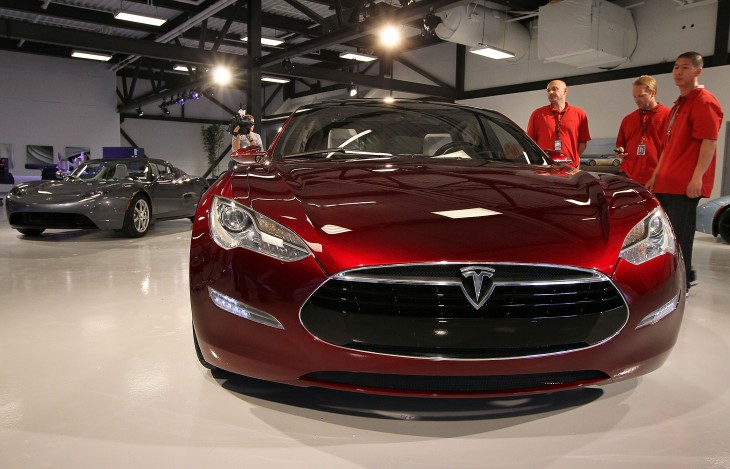
Apple is certainly free to build a car on its own, and it undoubtedly has the resources for it, but the truth is that Tesla’s Model S looks like the kind of car that Apple would build if it entered the market. The Model S has great design, advanced electronics, an approach that breaks with the status quo and a high-end branding for consumers.
The design language on the Model S also resembles Apple’s own minimalist tendencies. Both companies pay attention to the smallest of details in their products.
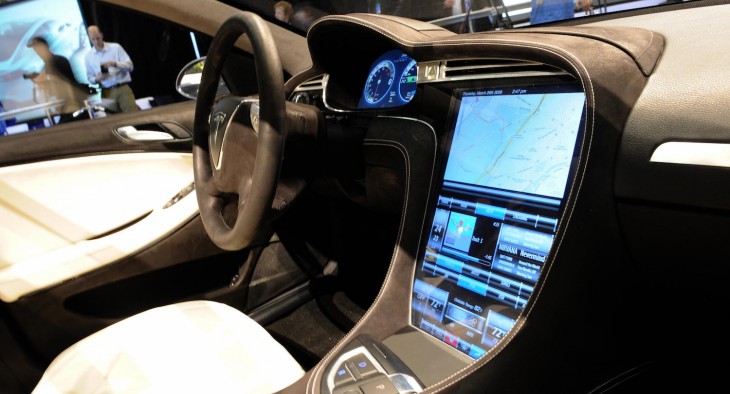
On the electronics side, the Model S features a 17-inch touchscreen that looks and could be mistaken for an oversized iPad.
Tesla’s reliance on sell cars through its own stores instead of third-party dealers resembles the strategy Apple has taken with its own retail stores. Both companies want to control the entire experience for customers in order to properly educate them about the unique advantages of their products.
A shared environmental focus
Cook has highlighted environmental responsibility as one of his key priorities at Apple. Last year, he hired ex-EPA chief Lisa Jackson to take charge of the company’s greentech and efficiency initiatives.
Tesla, of course, has made environmental friendliness one of the pillars of its brand. By uniting, Apple and Tesla could increase their respective impacts while also improving the perception of their brands among consumers that prioritize the environment when making purchases.
Apple could help Tesla scale
Musk has been open about the fact that Tesla almost didn’t survive. In 2008, the company was close to shutting down when it managed to close an investment on the last hour of the last day. Tesla is in a healthier place now, even flirting with profitability, but Apple could still give the company a boost by bankrolling its growth, smoothing out any production inefficiencies and acting as a financial buffer.
Tesla delivered 6,900 vehicles in the fourth quarter of 2013. By comparison, Apple sold 51 million iPhones and 26 million iPads in its most recent quarter. There’s a world of difference between producing a car and a phone, but Apple’s specialization in advanced production techniques could benefit Tesla. Apple has also proved adept at managing an empire of suppliers.
The Model S isn’t exactly affordable, but Tesla is trying to build a $30,000 car in the next few years. With Apple’s experience and resources, it could optimize the production process to drive down costs and increase volume in order to meet the mass market demand that a mid-range vehicle would generate. The Model S will have niche market share like the Mac, but if the right conditions come together, Tesla’s next-gen car could achieve mainstream success similar to the iPhone.
Cook, who previously served as Apple’s Chief Operating Officer, is widely acknowledged as a master of operations and efficiency. If he brought his expertise to bear on Tesla, the car maker could solve some of its production issues and scale faster. Last October, Tesla hired Apple VP of Hardware Engineering Doug Field to head up its vehicle programs, so clearly the company feels it has something to learn from Apple.
Tesla had just $796 million in cash at the end of the third quarter of 2013. If it joined forces with Apple, it would gain access to deep coffers that would help it weather any rough patches in the future.
Wrap-up
Speculating about an Apple/Tesla merger is an intellectual exercise at the moment, but there are plenty of reasons why it could work. Maybe not 24 billion reasons, but only Apple can decide that. In the meantime, we can keep dreaming.
See also: This is what 6 Apple moonshot technologies could look like
Photo credit: Scott Olson / Getty Images, Justin Sullivan / Getty Images, Robyn Beck / Getty Images
Cincinnati Mayor John Cranley is planning to announce a partnership between the City of Cincinnati and Enroll America during an event planned for Southern Baptist Church on Reading Road on Tuesday. The event is part of a statewide outreach effort by the Get Covered America campaign to educate residents about their new health insurance options […]