

The Impossible Lives of Greta Wells by Andrew Sean Greer
Reviewed by Sierra from Portland, Oregon.
 Laughzilla the Third (2012)
The Third Volume in the Funny Stuff Cartoon Book Collection Available Now.
Laughzilla the Third (2012)
The Third Volume in the Funny Stuff Cartoon Book Collection Available Now. |
 Themes Memes and Laser Beams - The Second Volume in the Funny Stuff Cartoon Book Collection.
 Click Here to get the book in Paperback While Available on Amazon |

Funny Stuff : The First Cartoon Book from The Daily Dose. Available on Lulu. |
The Impossible Lives of Greta Wells by Andrew Sean Greer
Reviewed by Sierra from Portland, Oregon.
Dilbert readers – Please visit Dilbert.com to read this feature. Due to changes with our feeds, we are now making this RSS feed a link to Dilbert.com.

At SXSW today, Parse co-founder and CEO Ilya Sukhar announced Facebook’s F8 conference will be held this year on April 30 at the San Francisco Design Concourse. That the announcement comes from Sukhar is fitting because Facebook, Instagram, as well as Parse engineers and product team members will be available throughout the conference to provide 1:1 help and advice.
The conference will be a little different this year: it will be squarely aimed at developers eager to learn how to best use Facebook, Instagram, and Parse to build, grow, and monetize their apps. The company is promising a full day of technical sessions and hands-on labs, open to more than 1,500 mobile and Web developers from all over the world.
By having a pure developer conference, Facebook says it is “going back to its roots.” The first F8 event, held in May 2007, introduced developers to the social graph. In July 2008, Facebook showed off Facebook Connect for websites, but also introduced a new profile design. In April 2010, Facebook unveiled social plugins (including the Like button), the Open Graph Protocol, Graph API, and OAuth 2.0 support. In September 2011, Facebook introduced the Timeline profile and a broader version of its Open Graph.
In 2012 and 2013, Facebook chose not to host F8 in favor of multiple smaller events. Now, three years later, the company looks eager to build on its Parse acquisition. If we are to believe the message going out today, there won’t be much user-focused news at F8. That being said, if Facebook has decided to bring back its only major conference, chances are it has something notable to share.
F8 2014 will open with a morning keynote, followed by four tracks that cover getting started guides, technical best practices, infrastructure strategies, engineering deep dives, and advertising tips for apps and games. Facebook says it will also have sessions dedicated to open source technologies.
Facebook will start accepting applications for the event “soon.”
Top Image Credit: Brendan Smialowski/AFP/Getty Images

Banjo has released an update today for its Android and iOS applications as well as a brand new website that brings a new feature called “Rewind.”
The new feature allows users to pinpoint a specific time during an event to view the updates and experiences of others at that moment, which the company says will do to the Internet what TiVO did for TV.
Once you click on an event — such as SXSW or the Kiev protests — you’re able to quickly go back in time to see how the event unfolded on social media and in the news and see how it unfolded through the updates of those who were there.
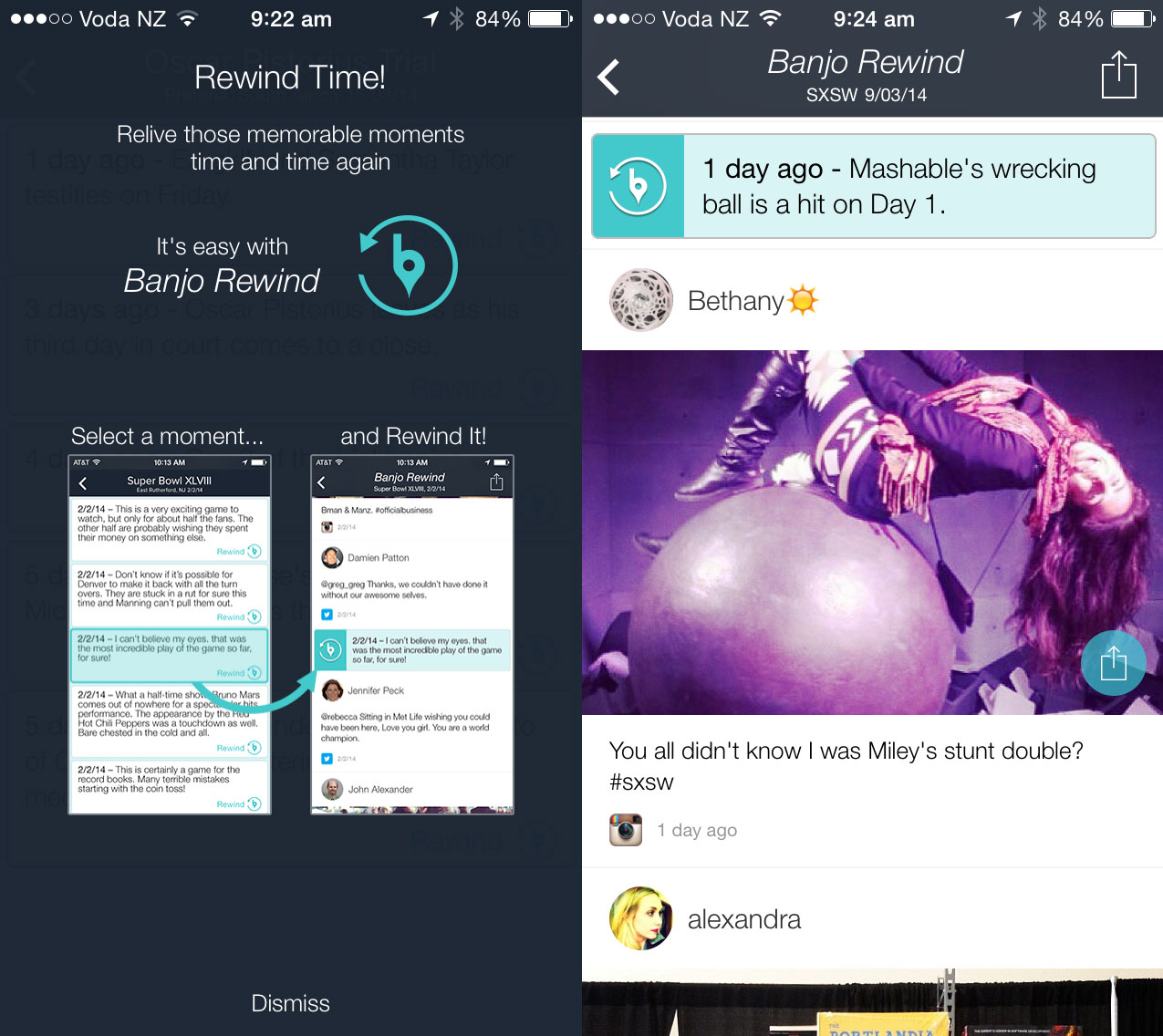
It’s amazing just how powerful this functionality is for following events as they unfold, especially since Twitter itself doesn’t provide any tools that help with tracking developing stories or for following events in a meaningful way.
Banjo captures social media updates from across many platforms, including Instagram, Twitter, Google+ and Facebook to try and piece together the best picture of how an event unfolded. What’s amazing is just how high-quality the content is; Banjo automatically filters out a lot of the spam that’s seen on social media so that it’s clean and easy to read.
Banjo originally launched at SXSW in 2012 as a service for meeting new people in your area, but the service pivoted in January to tracking events on social media.
The new Banjo presents itself as something that appears on the surface to be very similar to Storify, except much of the service is automated and uses a secret algorithm to analyse social media in real time to present it in a readable banner.
Download the updated version of Banjo from the iOS or Android store to try the new Rewind feature and you’ll never be behind on a trend again.

A few days ago, Microsoft posted up a teaser site that announced the company will be unveiling the next version of DirectX at Game Developer Conference on March 20.
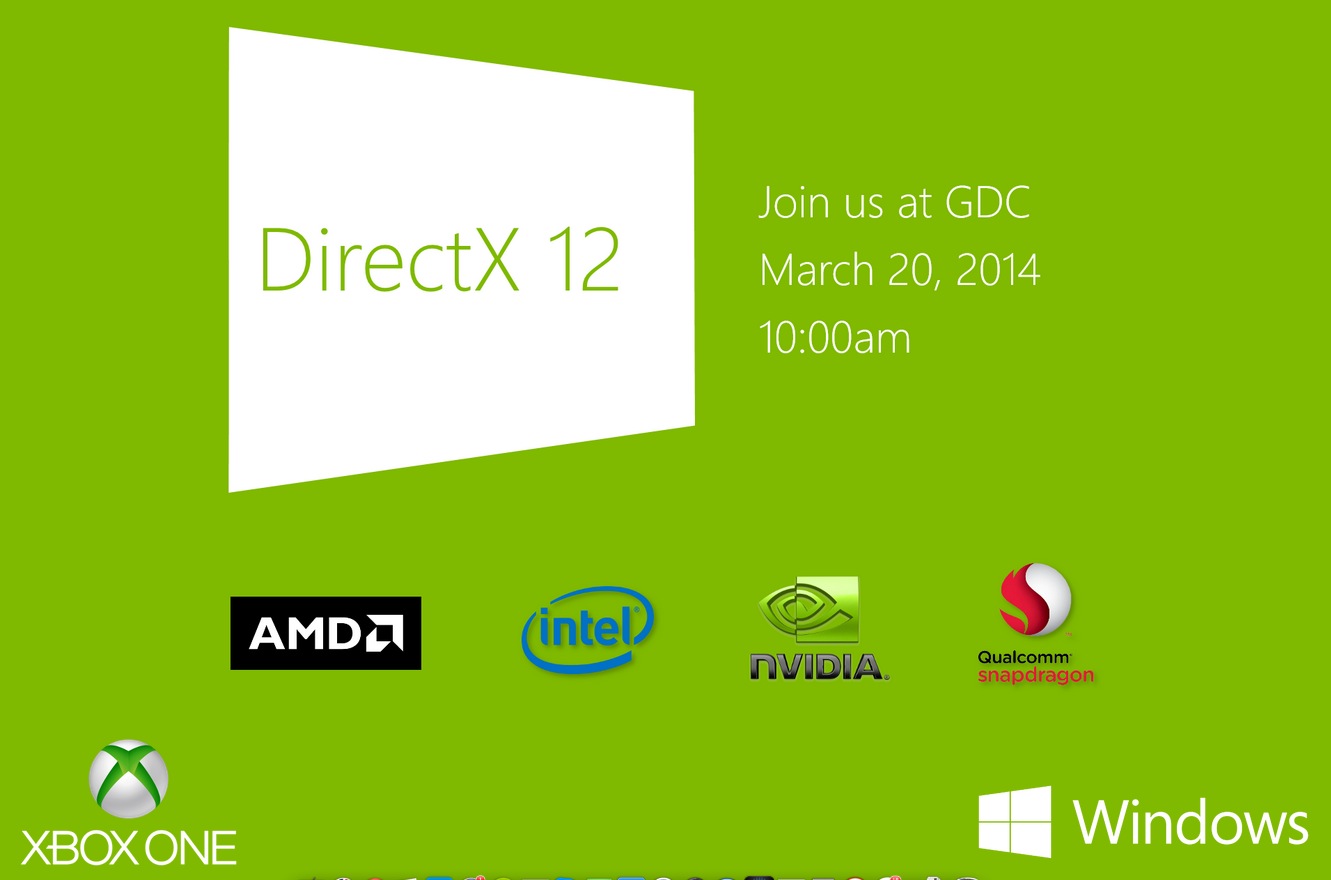
Today, the company added the Xbox One logo to the site and tweeted a second tease, saying that the new version of DirectX will also work on its flagship console.
Game on #XboxOne? So do we. Find out more at #GDC. #DirectX12 – http://t.co/cLyhBwnNav
— DirectX 12 (@DirectX12) March 7, 2014
The Xbox One shares a kernel with Windows, which means it’s likely much easier for the company to port such innovations across to the console quickly. It’s not yet clear what changes DirectX 12 will bring, but if Microsoft is making a fuss like this it probably has something big to show off.
Headline image via Robyn Beck/AFP/Getty Images