

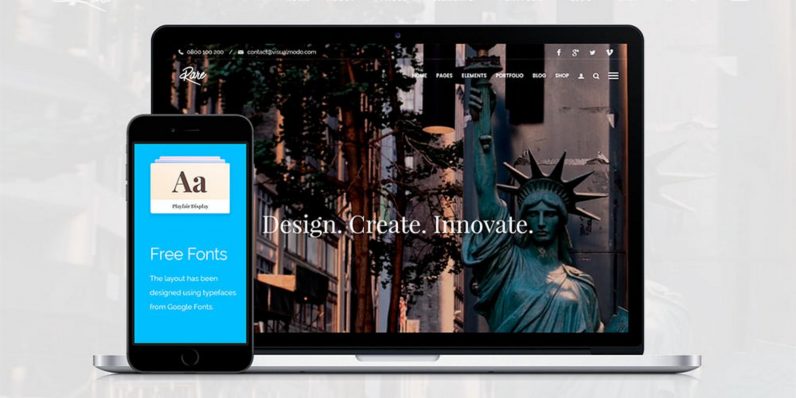
You can score the best of both worlds — easily deployed, yet entirely customizable website templates — with this lifetime subscription to Visualmodo WordPress Themes. It’s on sale now at 84 percent off, just $39, from TNW Deals.
 Laughzilla the Third (2012)
The Third Volume in the Funny Stuff Cartoon Book Collection Available Now.
Laughzilla the Third (2012)
The Third Volume in the Funny Stuff Cartoon Book Collection Available Now. |
 Themes Memes and Laser Beams - The Second Volume in the Funny Stuff Cartoon Book Collection.
 Click Here to get the book in Paperback While Available on Amazon |

Funny Stuff : The First Cartoon Book from The Daily Dose. Available on Lulu. |
You can score the best of both worlds — easily deployed, yet entirely customizable website templates — with this lifetime subscription to Visualmodo WordPress Themes. It’s on sale now at 84 percent off, just $39, from TNW Deals.
Astrology, tea leaf-reading, crystal balls, and the movies. Quick quiz: Which of these four would be prognosticators has accurately predicted our tech future? If you answered “movies,” consider yourself worthy of an Oscar. When it comes to predicting the future, Hollywood has turned out to be a far more accurate seer than your local crystal ball-gazing psychic. Robots, artificial intelligence, space travel, genetic engineering – even smartwatches. They’re all there in the movies and TV shows – some of them decades old – that baby boomers and Gen X’ers grew up with. Among the future inventions that have loomed large…
This story continues at The Next Web
When sports analytics folks crunch the numbers behind professional athlete’s batting, pitching, throwing and dunking, they are looking at past performance to better predict future behavior. Marketers and developers do the same for you and me but therein lies a problem (and a tremendous opportunity). Professional athletes are paid to do the same things well, repeatedly. You and I (assuming LeBron James is not reading) have interests, passions, hobbies, etc. that are ever-changing. Solely focusing on what we liked last month doesn’t predict 100 percent what we’ll be into today. Connecting to the kinetic While we wholly accept that data…
This story continues at The Next Web
Dilbert readers – Please visit Dilbert.com to read this feature. Due to changes with our feeds, we are now making this RSS feed a link to Dilbert.com.
When Adam Smith, champion of capitalism, wrote The Wealth of Nations in 1776, he could not have foreseen that someday many of the world’s biggest companies would be giving away their services for free. But that’s exactly what’s happening in today’s digital economy. Costs are rapidly approaching zero across a wide range of services as we drift further from a society focused on money and traditional economics to a digital-heavy culture that demands free apps and 24/7 access to information. In lieu of dollars or euros, companies are bargaining for people’s attention — and data. A new economic paradigm This…
This story continues at The Next Web