
Dilbert readers – Please visit Dilbert.com to read this feature. Due to changes with our feeds, we are now making this RSS feed a link to Dilbert.com.
 Laughzilla the Third (2012)
The Third Volume in the Funny Stuff Cartoon Book Collection Available Now.
Laughzilla the Third (2012)
The Third Volume in the Funny Stuff Cartoon Book Collection Available Now. |
 Themes Memes and Laser Beams - The Second Volume in the Funny Stuff Cartoon Book Collection.
 Click Here to get the book in Paperback While Available on Amazon |

Funny Stuff : The First Cartoon Book from The Daily Dose. Available on Lulu. |
Dilbert readers – Please visit Dilbert.com to read this feature. Due to changes with our feeds, we are now making this RSS feed a link to Dilbert.com.

Space launches are some of the most spectacular and nerve wracking events you can witness. And when you are actually involved in one, you realize just how much can go wrong. We are currently in Florida, nervously counting down the hours until we launch our experiment, sending thousands of microscopic worms to the International Space Station (ISS) aboard the SpaceX Falcon 9 rocket. The launch, taking place at NASA Kennedy Space Center on December 4, isn’t the only one we have to worry about. Our mission is dependent on a Soyuz rocket successfully carrying three crew members to the ISS…
This story continues at The Next Web

Flask is an incredibly versatile tool that can get you halfway to a finished web experience or working digital app very quickly. That’s why it’s a go-to for heavy-duty users like Airbnb, Netflix, Uber, Samsung, Reddit and more. It’s also a brilliant entry point for young programmers, something you’ll learn fast with The Professional Flask Developer course bundle, now just $23.20 (over 90 percent off) from TNW Deals with promo code: GREENMONDAY20.
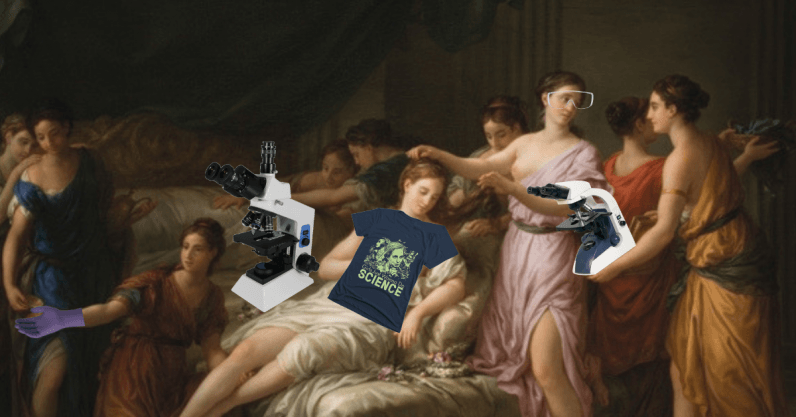
Can you name a female scientist from history? Chances are you are shouting out Marie Curie. The twice Nobel Prize-winning Curie and mathematician Ada Lovelace are two of the few women within Western science to receive lasting popular recognition. One reason women tend to be absent from narratives of science is because it’s not as easy to find female scientists on the public record. Even today, the numbers of women entering science remain below those of men, especially in certain disciplines. A-level figures show only 12 percent of candidates in computing and 22 percent in physics in 2018 were girls.…
This story continues at The Next Web
Can you name a female scientist from history? Chances are you are shouting out Marie Curie. The twice Nobel Prize-winning Curie and mathematician Ada Lovelace are two of the few women within Western science to receive lasting popular recognition. One reason women tend to be absent from narratives of science is because it’s not as easy to find female scientists on the public record. Even today, the numbers of women entering science remain below those of men, especially in certain disciplines. A-level figures show only 12 percent of candidates in computing and 22 percent in physics in 2018 were girls.…
This story continues at The Next Web