

Dilbert readers – Please visit Dilbert.com to read this feature. Due to changes with our feeds, we are now making this RSS feed a link to Dilbert.com.
 Laughzilla the Third (2012)
The Third Volume in the Funny Stuff Cartoon Book Collection Available Now.
Laughzilla the Third (2012)
The Third Volume in the Funny Stuff Cartoon Book Collection Available Now. |
 Themes Memes and Laser Beams - The Second Volume in the Funny Stuff Cartoon Book Collection.
 Click Here to get the book in Paperback While Available on Amazon |

Funny Stuff : The First Cartoon Book from The Daily Dose. Available on Lulu. |
Dilbert readers – Please visit Dilbert.com to read this feature. Due to changes with our feeds, we are now making this RSS feed a link to Dilbert.com.
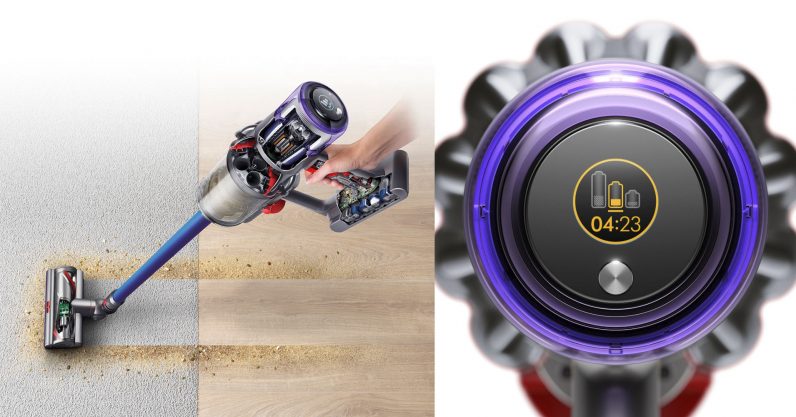
Last year, Dyson promised it would no longer develop corded vacuums, because, well, cords are annoying. But battery life is limited. When I reviewed the V10 last year, I had to constantly think about which power setting to use – do I want more suction or longer runtime? Dyson’s new V11 Torque Drive makes that a concern of the past. Dyson’s stuck a 20 percent more powerful motor and bigger battery in the vacuum, but the biggest change is the V11’s Dynamic Load Sensor. The DLS is able to detect the resistance on the motorized brush head and adjust suction…
This story continues at The Next Web

The Lightning Network is where all the weird and wonderful use cases of cryptocurrency micro-payments come to life. You can order a Coke, feed chickens, dispense candy, and even play roulette or Pokémon, all courtesy of the Bitcoin sidechain. But thanks to one enterprising dev, the Lightning Network now has scratchcards. This one has 1,000,000 Satoshis (0.01 BTC) hidden in it. That’s about $40 at the time of writing, not too bad for a scratchcard that might only cost you a few cents worth of Bitcoin. How does it work? A scratchcard is created when someone writes something that can…
This story continues at The Next Web
Or just read more coverage about: Bitcoin

Late last year, I flew to Hong Kong to see the the launch of the Honor View 20 first hand. This phone was notable for three reasons. Firstly, it was the second commercially available phone to ship with a 48MP rear camera. Secondly, it was the first phone to come with a punch-hole camera, beating the Samsung Galaxy 10 to the punch. Finally, it is among the first Honor phones to come with Magic UI, rather than EMUI. When you’ve got a phone that’s so groundbreaking, you’ve got to resist the urge to make any snap judgements. After all, the…
This story continues at The Next Web

There’s a setting that popular Ethereum service MetaMask doesn’t enable by default, and its putting users‘ privacy at risk. MetaMask works as a gateway to decentralized apps (dapps) running on Ethereum’s blockchain. It’s a browser extension that seeks to simplify the use of cryptocurrency, which tends to intimidate unfamiliar users. It’s one of the most popular apps of its kind, boasting over a million installs on Chrome. The company built a new “privacy mode” last year, designed to keep users from unintentionally broadcasting their Ethereum addresses to sites they visit while MetaMask is in use; these signals are known as “message broadcasts.” Ethereum…
This story continues at The Next Web