The Daily Dose

laugh every day with cartoons jokes and humor
  • Home
  • About
    • Press
      • Press Release – Announcing Laughzilla the Third ebook
      • Press Release – The Daily Dose Kicks Off Its 16th Year with New Books and More Irreverent Laughter
      • Press Release – Themes Memes and Laser Beams Now Available in Paperback
      • Press Release – Announcing Themes Memes and Laser Beams
      • In The News
    • Privacy
  • Archive
  • Books
  • Shop
  • Collections
    • Galleries
      • Gallery
      • Captions
      • Flash Cartoons & Greeting Cards
        • Laughzilla’s Oska Flash Animation Cartoon Greeting Cards
        • Oska Cupid Love Humor
    • #OccupyWallStreet
    • cats
    • China
    • Food
      • Hors d’oeuvres
        • Ball of Cream Cheese
      • Entrees / Main Courses
        • Meatballs with Baked Beans and Celery
    • Gadaffy
    • Google
  • Links
  • Video
  • Submit a joke
DeviantART Facebook Twitter Flickr pinterest YouTube RSS

Subscribe for Free Laughs!


Latest Comics

  • This Memorial Day, Trump Meme Coin Congratulates Profit Takers
  • 25 Years of The Daily Dose
  • The Best Cartoons
  • Bitcoin sings “Fly Me To The Moon”
  • 22 years of The Daily Dose

Comic Archive

Kiryat Chayim My Choclate

Daily Dose News Roundup

  • Netflix launches Playground, a standalone games app for children aged eight and under
  • Monzo is shutting down its US operation, and its European banking licence explains why
  • Anthropic cuts Claude subscribers off from OpenClaw in cost crackdown
  • Musk wants a million data centre satellites. Bezos wants 51,600. Scientists want to know why.
  • Google launches Gemma 4: four open-weight models from smartphones to workstations

Quotable

"This week the residents of Joplin, MO and other Midwest towns were devastated by a whirlwind storm of tornados that drew media attention, while President Obama was hosted in England by the Queen in a whirlind storm of tourism that drew media attention." ~ Yasha Harari

Fresh Baked Goods

Get The Daily Dose's ebook: Laughzilla the Third - A Funny Stuff Collection of 101 Cartoons from TheDailyDose. Click here to get the e-book on Amazon kdp. Laughzilla the Third (2012) The Third Volume in the Funny Stuff Cartoon Book Collection Available Now.

Click here for the Paperback edition


Support independent publishing: Buy The Daily Dose's book: Themes Memes and Laser Beams - A Funny Stuff Collection of 101 Cartoons by Laughzilla from TheDailyDose. Click here to get the book on Amazon. Themes Memes and Laser Beams - The Second Volume in the Funny Stuff Cartoon Book Collection.

Click Here to get the book in Paperback While Available on Amazon

Themes Memes and Laser Beams - 101 Cartoons by Laughzilla. Get the e-book on Lulu.

Click Here to get The Daily Dose Cartoon ebook on amazon kindle

Funny Stuff :
The First Cartoon Book
from The Daily Dose.
Available on Lulu.

a couple of laughzillas on a blue diamond background

Soon anyone will be able write and share long-form articles on LinkedIn

Feb19
by Sindy Cator on February 19, 2014 at 1:31 pm
Posted In: Around the Web, Insider, Product Updates

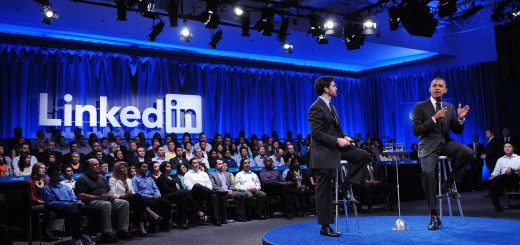
126663650 520x245 Soon anyone will be able write and share long form articles on LinkedIn

LinkedIn is expanding its Influencer initiative so that anyone can write and share long-form posts on the business-focused social network.

While the publishing platform has been around since 2012, LinkedIn has always positioned it as a curated offering for prolific entrepreneurs and politicians, such as Virgin Group founder Richard Branson, President Barack Obama and Huffington Post founder Arianna Huffington.

While the number of ‘Influencers’ on the platform has slowly grown, the vast majority of LinkedIn users have been unable to post their own thoughts and ideas in a similar format. Anyone can post a quick status update, but it’s never been a blogging platform – until now.

LinkedIn will continue the Influencer initiative, despite opening up its publishing platform to the masses. The company says only 25,000 members will have access to begin with, but it’ll expand that number over the coming months.

Why? With more content, LinkedIn hopes you’ll visit its site and mobile apps more often: “We believe in giving our members access to the business knowledge they need to be great at what they do,” Ryan Rosanskry, Head of Content at LinkedIn said. “To put that simply, we are making a commitment to our members: by spending just part of your morning on LinkedIn, we will make you better at your job today.”

Read Next: LinkedIn makes it easier to find Influencer content directly from the search box / LinkedIn now lets users comment, ‘like’ and mention other people at the bottom of Influencer posts

➤ Blog Post (Via TechCrunch)

Image Credit: MANDEL NGAN/AFP/Getty Images

└ Tags: syndicated
a couple of laughzillas on a blue diamond background

5 myths of cloud computing

Feb19
by Sindy Cator on February 19, 2014 at 1:09 pm
Posted In: Analysis and Opinion, Around the Web, comcastbusinesscampaign, Insider

cloud computing 520x245 5 myths of cloud computing

This post is brought to you by Comcast Business. 
Follow us @comcastbusiness.


If you were to believe all the marketing material that comes out of the big cloud software vendors, the cloud is the only future. It is has no downsides for the vendor or the client. Even the infrastructure and network providers benefit from increased sales and traffic. And it is the investor’s route to riches.

Everyone wins.

But is this really true? If something seems too good to be true, then it often is. People say I am a cynic, but a cynic is what an optimist calls a realist. So what are my reasons for doubting the fantastic claims?

Firstly, I am the first to acknowledge that there are huge benefits to the new cloud world. And if you are startup, then it is the only way to go. Out here in San Francisco and Silicon Valley cloud-delivered enterprise software is in vogue. Just 2-3 years ago, you had to be a B2C social-something to get any investor interest, press inches or quality recruits.  But startups like Huddle, ZenPayroll and Expensify are now cool.

So here are the top five benefits of a cloud offering for the vendor, which are very appealing:

  • Rapid sales cycle: With no cost or time to get clients started, and the ability to provide a “try and buy” approach, it is quick and easy to sign up business users. This is often below the IT Department’s radar, something I have called “Stealth Cloud”, circumventing complex and time-consuming procurement.
  • Cost of delivery: A self-service, multi-tenant, cloud solution means vendors can offer their solution equally to major corporations and to the “long tail” of SME customers just as cost effectively. No longer do vendors have to focus on the high margin multi-nationals, with their associated high cost of sales.
  • Ease of updates: Unlike on-premise solution, the vendor can quickly apply bug fixes or new features that are automatically applied to every client. This should reduce support calls and ensure an innovation lead over competitors.
  • Customer Success and benchmarking: With the usage patterns of every customer visible to the vendor, the vendor can make suggestions to drive up the benefits the customers are getting which will lead to further sales. But the vendor can also benchmark across customers to help laggards catch up and this can be another valuable revenue stream.
  • Annuity revenue model: The monthly revenue recognition can be painful to start with when cash is king and there is a risk that customers will churn. But in the long term the annuity revenue stream gives a great deal of long-term business confidence.

The five myths of cloud computing

But the story for the customer is not so compelling, thanks to these five cloud computing myths.

It is only for new tech companies

Established vendors can fudge this by hosting their legacy application and then providing a separate instance for every customer, if it is not a true multi-tenant application. This gives the rapid sales cycle benefits of the cloud, however none of the other cost of delivery savings.

The real answer is to rebuild the application so it is multi-tenant and will scale correctly when deployed onto any cloud architecture. This of course may be a non-starter and a new build may be quicker, easier and take advantage of new technologies. So the transition is harder for an established vendor, but not impossible.

Security is the biggest risk

This is often the default objection by client CIOs who are feeling threatened as they watch all the applications which they were paid to manage disappear off their network. The data security of the credible cloud application vendors is often better than their clients.

Of course, the point of greatest risk is using the public Internet from cloud vendor to the client. This can be easily mitigated by a direct connection to the cloud application, or even the CIO providing a private cloud network.

It is quicker to implement

A common myth is that cloud apps are quick to implement. The installation time is down to virtually zero as are upgrades, but the changes to user processes and working patterns still needs to be applied if the benefits of the new application are to be achieved. In fact implementation is even more important as it is the only thing preventing users churning and finding their own alternative cloud application.

You pay monthly

Whilst the cloud vendor websites all give prices monthly by user or some other metric, few if any actually charge monthly. Advertising monthly pricing but charging annually or quarterly is the norm.

In Salesforce’s history lesson Behind the Cloud, one revelation was cash flow benefits of charging annually upfront rather than monthly. Plus you then factor in a reduced workload because they are cutting and chasing one, not 12, invoices per year. But as a client this not only has a cash flow impact, but it also create a level of lock-in.

It is cheaper

How can it be in the long term?  Instead of a one-off perpetual license and a 15-25% annual support cost you have an annual charge. At some point the accrued cloud cost must be more than the upfront perpetual cost and annual maintenance. The cost of the infrastructure is also factored into the cloud licensing cost. This may or may not be cheaper than the cost for the client providing an infrastructure.

Now, I agree, you can offset the increased licensing cost in the long run for the lower cost of implementing upgrades. But at some point the on-premise and cloud lines will cross on the cost/time graph.

Don’t rush in

So every cloud does not have a silver lining. In fact, clouds turn bright sunny days a dull grey. And the puns go on….

But the point of this is, before you rush in as a client building the justification for moving to a cloud application on cost and speed of implementation grounds, pause and take a few moments to really think through the implications.

There is really only one compelling reason for implementing a new application – cloud or otherwise. A business reason. The new application will either drive up sales or drive down operational costs. Ideally both. The decision of cloud vs on-premises is more complicated and covered in a recent post.

So let’s not get seduced by the cloud vendors’ claims, many of which are myths.

└ Tags: syndicated
a couple of laughzillas on a blue diamond background

FullContact brings its human powered business-card scanning app to Android

Feb19
by Sindy Cator on February 19, 2014 at 12:54 pm
Posted In: Apps, Around the Web, Insider

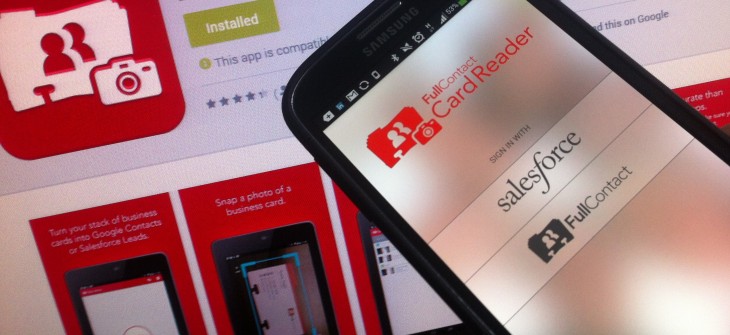
Photo 19 02 2014 09 45 21 730x335 FullContact brings its human powered business card scanning app to Android

Back in August, we brought you news on the new FullContact app, letting you snap a photo of a business card with humans adding the details to your iPhone contacts. And now, it’s available on Android too.

Born out of TechStars in 2011, FullContact offers a suite of tools that tap publicly-accessible data to auto-magically complete the missing information in your contacts list. It’s all about eliminating duplicate, partial, and out-of-date records.

There are, of course, many card reader apps on the market already, but most of these rely on OCR technology. FullContact also integrates directly with Salesforce, and lets you export the scanned cards to your device’s address book.

Related read: FullContact acquires Cobook to bring its unified address book service to iOS and Mac

➤ Full Contact | Google Play

└ Tags: news, syndicated
a couple of laughzillas on a blue diamond background

Can China’s coolest phone maker take Xiaomi-mania international? We ask VP Hugo Barra

Feb19
by Sindy Cator on February 19, 2014 at 12:52 pm
Posted In: Around the Web, Asia, Gadgets, Profiles and Interviews, Singapore, smartphones

xiaomi 9 520x245 Can Chinas coolest phone maker take Xiaomi mania international? We ask VP Hugo Barra

Popular Chinese smartphone maker Xiaomi has made its international ambitions official today with a launch in Singapore, during which it also announced that its flagship Mi-3 device will be arriving on March 7 with a price tag of S$419 ($332) unlocked.

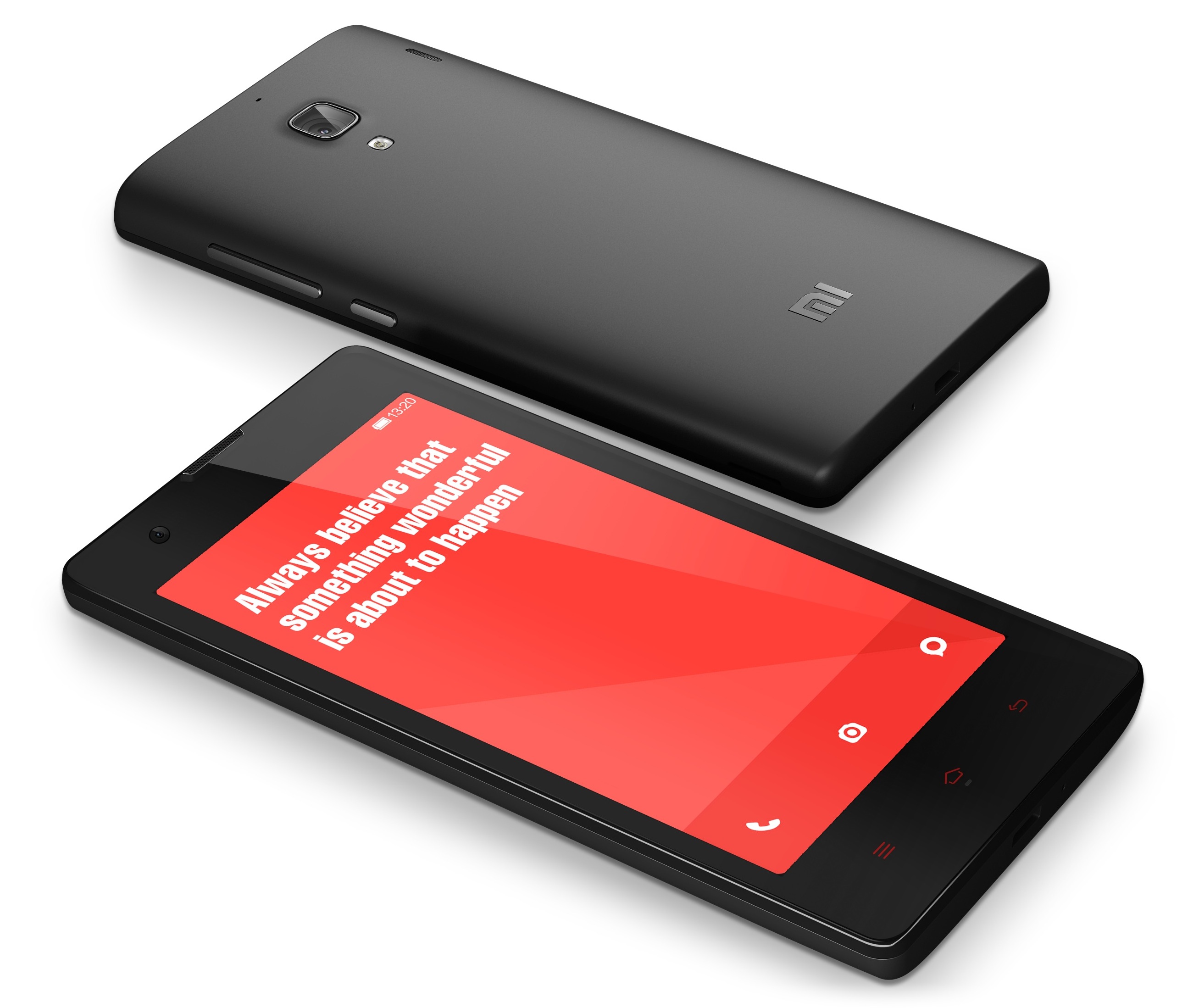
The company has already announced that it will bring the lowest-cost smartphone in its range of devices, the Redmi, to Singapore on February 21, for a very affordable price of S$169 ($134) unlocked. In fact, Xiaomi is also tying up with the three carriers in Singapore so consumers can get subsidies for the Redmi as well.

Already a hit in China — where it sold nearly 19 million phones last year — the red-hot smartphone maker has quietly expanded sales into Hong Kong and Taiwan, but the move into Singapore represents its first step outside of Greater China.

Challenges of a new market

The company’s international ambitions have been driven by high-profile former Google VP Hugo Barra — and now VP for Xiaomi Global — whom president and co-founder Bin Lin had pinned as the key person to plot the company’s overseas expansion roadmap. Being the very first country outside of Greater China, the Singapore launch is a culmination of efforts to adapt Xiaomi’s products for an English-speaking audience and build up the Xiaomi brand on a new slate.

In an interview with TNW, Barra says that bringing Xiaomi into a new market was “like building a new company essentially.” The Xiaomi team had to build a new operation from scratch — including logistics, customer support, delivery, after-sales, warranty repair services — and as it starts selling its devices this week, it has to build up local brand awareness.

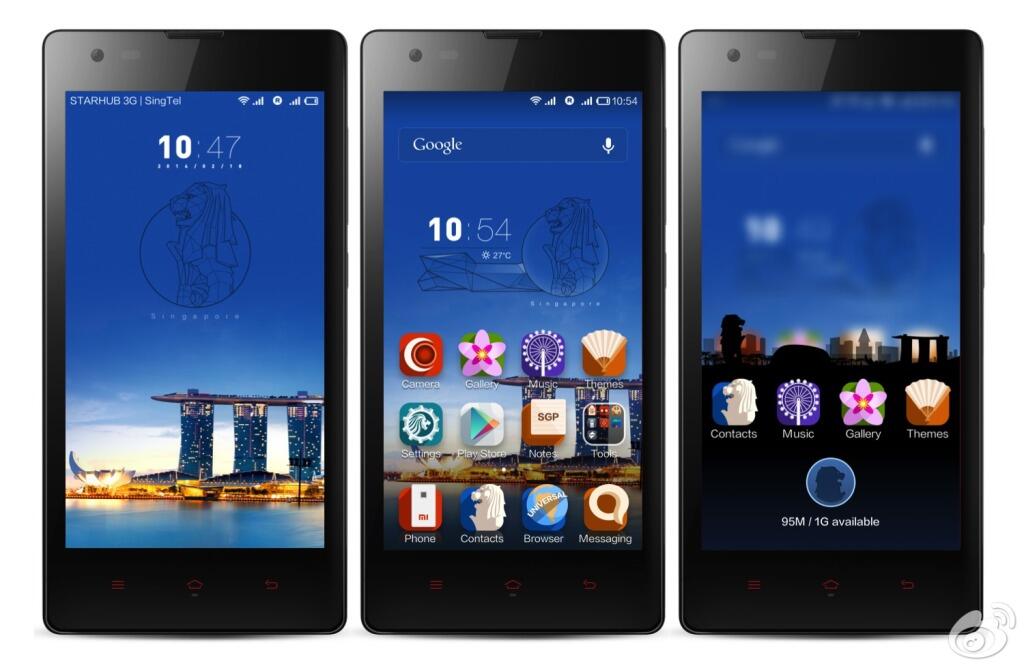
From the product perspective, Barra notes that it’s the first time Xiaomi is launching its highly-customizable MIUI firmware, which is based on Android, officially in English. “And that’s actually a big challenge — we’ve had to change a lot of things around the UI to accommodate English characters, because things are much more compact in Chinese,” Barra says.

Xiaomi SG 730x474 Can Chinas coolest phone maker take Xiaomi mania international? We ask VP Hugo Barra

Being Google’s former VP for Android, Barra’s expertise and experience comes in handy with the internationalization of MIUI, and Barra tells us that it “is not too different from like launching a Nexus phone” — he filed hundreds of bugs, and spent time doing testing in Singapore for the software.

There were some thoughts previously that Barra’s arrival at Xiaomi would herald in a bigger push for MIUI, which could even take on Android at some time by splitting out entirely into an operating system of its own — and this issue is even more pertinent now as Xiaomi plots its overseas moves.

However, Barra assures us that Xiaomi will “absolutely” stick with Android.

First of all, we are super invested into it. We have built so much on top of it and porting that to any other operating system would be a disaster — it would take years.

Secondly, backing any other operating system at this point would mean having to build an ecosystem — a developer ecosystem. Android is the only operating system out there, other than Apple’s super closed operating system, that enjoys a developer ecosystem. I’ve worked on this (Android) for three and a half years — it took such a long time, and such a crazy amount of work and money — from Google’s part — to actually catch up, to make Play Store really good, to make it a great experience for developers, to address all the fragmentation issues and all these things…

Thirdly, from a technical point of view, there’s no reason for us to deviate from Android. Why would we? It’s an amazingly flexible platform, we can build whatever we want on top of it, we can build whatever we want under it, as long as we remain compatible (with Android), which is our promise to Google — we can do whatever we want.

Given that Barra will be focusing on addressing different software design needs in different countries, he says it would not be a good use of Xiaomi’s engineers’ time to even think of working on a new operating system. It seems like Barra’s move over to Xiaomi is a “new Android chapter” indeed, and cements the idea that the Chinese company is a friend of Google, not a foe.

Why Singapore?

As I wrote recently, Singapore is becoming a favorite stop for China’s tech giants as they begin their expansions into Southeast Asia.

At the launch event, Barra as well as Lin spoke at length about how Singapore is a “good first challenge” for Xiaomi to figure out how to set up logistics and after-sales services due to its strong infrastructure — and is a launching pad for the company to ramp up to markets with higher complexities, by starting from one with a lower complexity first.

Side angle red 730x613 Can Chinas coolest phone maker take Xiaomi mania international? We ask VP Hugo Barra

Barra shed some light on why, despite Xiaomi’s price point being particularly appealing for emerging markets such as in other parts of Asia, Latin America or Africa, Singapore has become a key to its expansion plans.

If we were a traditional handset manufacturer just looking to move products, that would be the logical thing to do, that’s where the highest demand is going to be. But we’re not. We are trying to build a pretty high-touch end-to-end relationship with people. From the moment they come to the website to buy a product, to experience our customer support and hopefully not — but if they have problems, to experience our repair — and that requires a lot of work, a lot of infrastructure, partnerships and so on. It’s so much easier to do that here. Plus, the cost of failure is low because it’s a small market.

A key theme that both Barra and Lin were keen to emphasize is that Xiaomi isn’t focusing purely on numbers — that is, how many phones they sell. Instead, the company wants to start small on purpose, so that it can gain insights into what customers think about the Xiaomi devices and MIUI firmware, then improve on that. Barra says:

I would be very happy if we sell out everything we’re going to put out for sale on Friday. I don’t think we are going to sell it out in minutes, I think it will take a few days — but most importantly what I want to make sure is that those first however many customers are treated in the most VIP possible way. I really want to listen to them, I really want to see what they’re thinking, how they’re using the product.

A few possible areas of improvement when expanding overseas could be to do with translation or carriers, Barra notes. “We might find that we didn’t do a good enough job on the translation. We might find that we didn’t do sufficiently stringent carrier testing. There’s just so much we can learn here, which is why it’s so important to start small,” he tells us. Some of Xiaomi’s services are also still in the process of being moved to international data centers, such as the theme app store, so that could result in a slower experience for users too.

With the impetus to start small, Xiaomi is starting by shipping to Singapore users from Shenzhen via UPS, which takes a ready package and then delivers it — and Barra notes this is an expensive approach.

However, as soon as Xiaomi understands the market and has a sense of how things are developing, it is going to start doing distribution from Singapore. “So we will have a warehouse here, just like we did in Taiwan, so we ship big pallets of products from China to Singapore — and then here we have staff that does picking and packing and local shipping, so our cost of shipping will go down significantly. The next step for us in Singapore is to have a local warehouse, and then who knows, after that the next step is to have a regional distribution center,” Barra says. 

Exporting the Xiaomi craze

IMAG0213 730x412 Can Chinas coolest phone maker take Xiaomi mania international? We ask VP Hugo Barra

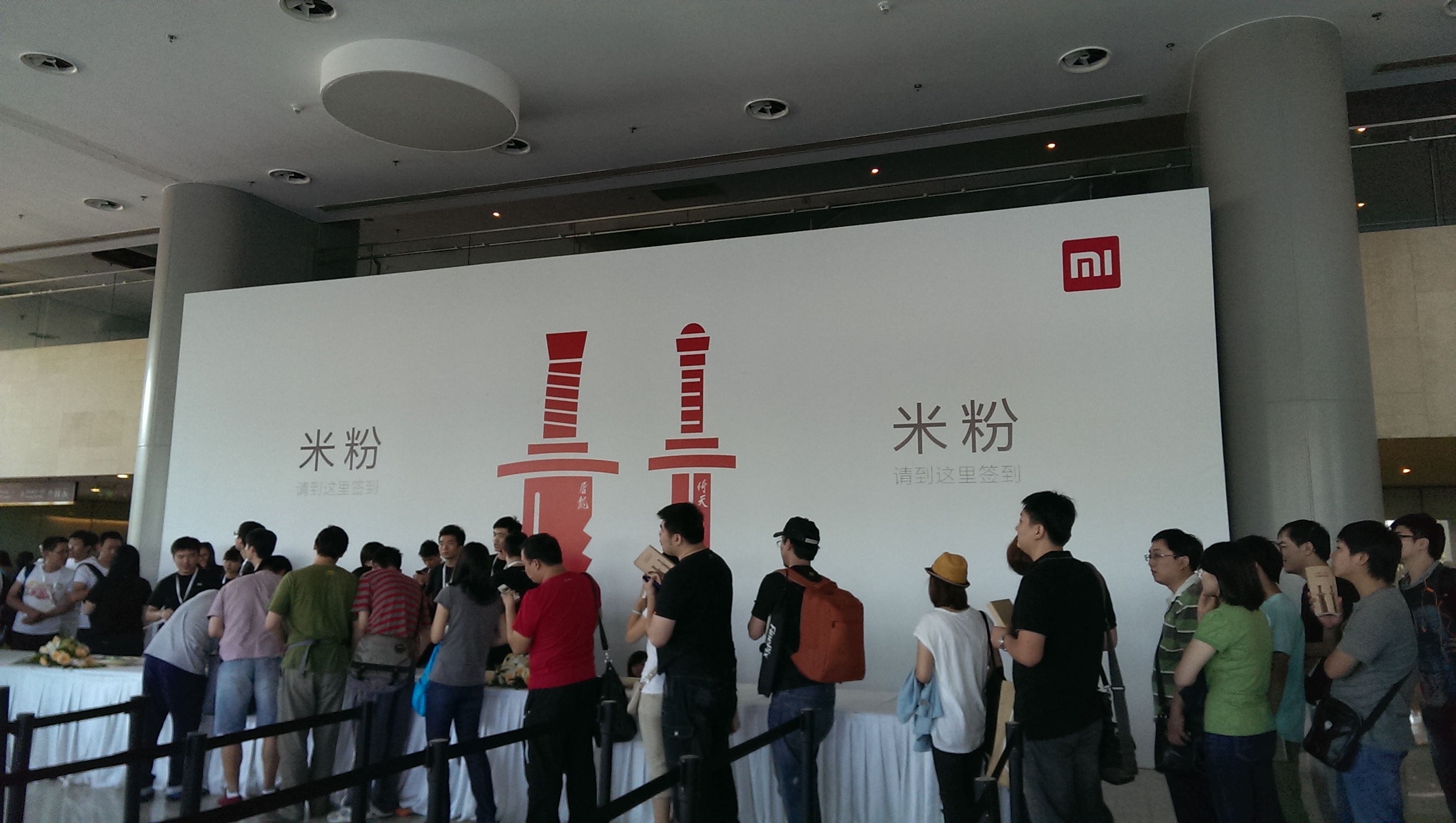
When I attended Xiaomi’s launch event for the Mi-3 Android phone and a 3D smart TV last year, I witnessed the fervent passion of Xiaomi fans. The event was overwhelmingly packed with people, so much so that the security guards had to come out in full force to prevent more people from heading into the conference hall.

When asked if Xiaomi can ever bring the similar level of passion for its devices overseas, Barra says: “It’s a huge challenge. It will not be easy. It’s going to take a huge amount of work. But yes, I think we can do it.”

Barra notes that the company is “squarely targeting the young-at-heart techie — people who appreciate technology, who like gadgets, who like high-performance, who like to customize, who like to tweak and optimize and so on and so forth.” These people will hopefully be the ones who enthusiastically provide feedback, let Xiaomi understand what users in the particular market are happy or unhappy with, and eventually lead to a product that can resonate with more customers. Barra says:

We think that if we can conquer the hearts and minds of these people, they will become our brand ambassadors, as long as we never let them down. They’ll tell their friends, they’ll post on their social media stream, they’ll tell their family, they’ll buy a device for their grandmother or something. So that’s what we have to do. It’s no different from what we have done in China.

It remains to be seen how Singapore, and the subsequent markets in Southeast Asia that Xiaomi is intending to move into, will react to the company’s so-far wildly-popular smartphones in China. If all goes well, Xiaomi could very well be uttered in the same breath as companies like Samsung and Apple — but a long journey lies ahead and Singapore is only a tiny step forward into the vast challenge it faces as it seeks to adapt its handsets and software for international tastes.

Headline image via Hugo Barra / Google+, other images via Xiaomi

└ Tags: china, news, syndicated
a couple of laughzillas on a blue diamond background

Google’s growth-stage equity fund, Google Capital, officially launches today

Feb19
by Sindy Cator on February 19, 2014 at 12:31 pm
Posted In: Around the Web, Google, Insider

FireShot Screen Capture 065 Google Capital www googlecapital com 730x426 Googles growth stage equity fund, Google Capital, officially launches today

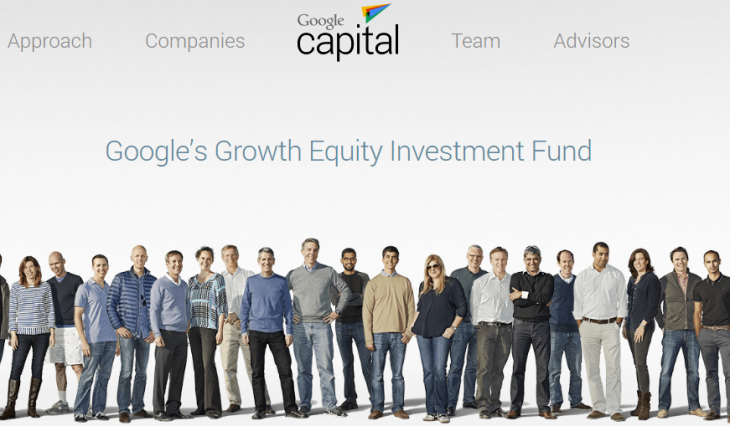
Almost a year after it was first announced, Google has officially unveiled its new equity fund aimed specifically at growth-stage companies.

Indeed, Google Capital will have a slightly different focus to its existing Google Ventures fund, which is aimed more at fledgling startups. The new fund will be backed by Google itself, as you’d expect, and led by partners David Lawee, Scott Tierney and Gene Frantz. They will be looking for companies “that have already built a solid foundation and are really ready to expand their business in big ways,” says Lawee.

Google Ventures has helped fund more than 200 startups since 2009, including Nest which it subsequently went on to acquire for more than $3 billion. And Google Capital has already dished out to startups that include SurveyMonkey, Lending Club and Renaissance Learning, so we can likely expect many more to follow in the coming months and years.

➤ Google Capital: investing in growth-stage companies

└ Tags: news, syndicated
  • Page 14,486 of 14,637
  • « First
  • «
  • 14,484
  • 14,485
  • 14,486
  • 14,487
  • 14,488
  • »
  • Last »
The Daily Dose, The Daily Dose © 1996 - Present. All Rights Reserved.
  • Home
  • About
  • Archive
  • Books
  • Collections
  • Links
  • Shop
  • Submit a joke
  • Video
  • Privacy Policy