
Dilbert readers – Please visit Dilbert.com to read this feature. Due to changes with our feeds, we are now making this RSS feed a link to Dilbert.com.
 Laughzilla the Third (2012)
The Third Volume in the Funny Stuff Cartoon Book Collection Available Now.
Laughzilla the Third (2012)
The Third Volume in the Funny Stuff Cartoon Book Collection Available Now. |
 Themes Memes and Laser Beams - The Second Volume in the Funny Stuff Cartoon Book Collection.
 Click Here to get the book in Paperback While Available on Amazon |

Funny Stuff : The First Cartoon Book from The Daily Dose. Available on Lulu. |
Dilbert readers – Please visit Dilbert.com to read this feature. Due to changes with our feeds, we are now making this RSS feed a link to Dilbert.com.

Insert joke about how quickly the week flew by like drones at CES. Napier, Robbie and I had a great time covering CES this year! As we look back at the week that was CES 2015, here’s some of biggest news to come out of Vegas, along with the silliest things off the show floors. For those who missed our daily recap, check them out below: Day 0 | Day 1 | Day 2 | Day 3 Cool beans US-based TV watchers were excited by this week’s announcement of Dish’s Sling TV — a $20 per month subscription service to select cable channels.…
This story continues at The Next Web
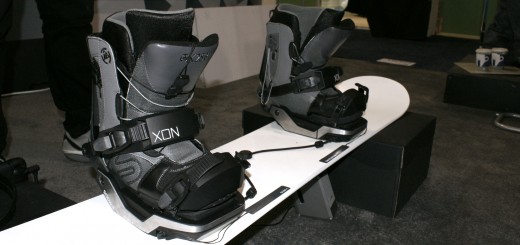
CES had so many things to put on your wrist. Some were cool, most were just a waste of money. But nearly all of them want to tell you how many steps you take. Fortunately, some tracking devices don’t need your wrist and are ready for more than just a way to see how far you walked (spoiler, I walked a lot at CES). The XON Snow-1 bindings track your snowboarding form with a flex sensor that attaches to your snowboard and load-balance sensors in each binding to track your balance. The data, in conjunction with the Bluetooth-tethered companion app, can…
This story continues at The Next Web
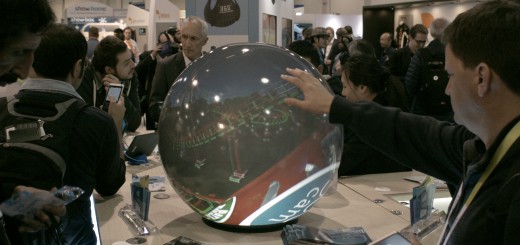
The 360-degree market is exploding thanks to VR headsets like the Oculus Rift. But while more and more cameras are being shoved into the market, beyond cramming your eyes into a headset or watching on a flat screen, there’s few ways to watch these videos in a fun, dynamic way. Pufferfish’s PufferSphere M is a video ball that lets you navigate a 360-degree video as if it were a globe. Just scroll with your fingers to peer around the video scene. While it can be a little odd, if you’re a business trying to display a 360-degree video, this is an…
This story continues at The Next Web
ListObjects (Tables in Excel’s UI) are structured ranges. I use them constantly. I love the built-in named ranges and referring to them in VBA without a lot of hullabaloo. It’s as close to a database as you’re going to get in Excel. Recently I decided to automate a process of adding some payroll records to the end of a table. If I were using just a range, I would find the next available row like
That works most of the time for ListObjects too. It returns the row right below the last row of the ListObject. In most cases, when you add some data to that row, the ListObject expands. In the case where there is no data in the ListObject and there is only a blank row, however, it doesn’t work. The ListObject doesn’t expand, and even if it did, you would have a blank row.
The ListObject object has a InsertRowRange property that returns a Range object. When a ListObject has no data, it has a header row and a blank row[1] ready to accept data.
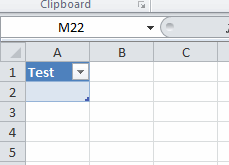
When you enter something into that row, it doesn’t give you a new insert row, it just sits there.
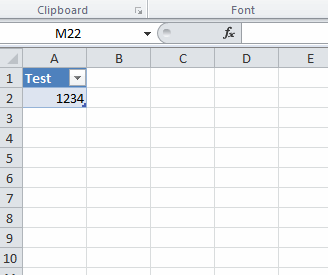
When I’m trying to write something to the end of a ListObject, I test to see if InsertRowRange is nothing[1]. Here’s a snippet
If InsertRowRange is Nothing, then table isn’t empty and I offset down however many rows there are plus one. The old method of End(xlup) works in this situation too. I don’t find top down better or worse than bottom up, so use whatever you like. If InsertRowRange isn’t Nothing, that means there’s no data in the table. In that case, I can insert starting in InsertRowRange.
Here’s the whole procedure, if you’re looking for context.
[1]: Now you get the disclaimer. There’s a lot you can do with Tables in Excel. You can have a header row or now header row. You can have a totals row or not. And you can have a bunch of other stuff that makes this code not work. I use Tables a lot from a UI perspective and sometimes I have various features on or off. But the way I’m using a ListObject in this example is as a datastore. It’s not meant to be messed with – only for the VBA to read from and write to. In those cases, I make the Table the only thing on the sheet, it always has a header, and it never has a total row. If you want to use Tables differently, you’ll have to modify the code to accommodate the differences.